OnScenes
  • OnScenes
  • News
  • Art
    • Music >
      • Album Review
    • Poetry
    • Film >
      • Filmmakers >
        • Movies
    • Theater >
      • TheaterMakers
  • Philosophy
  • PhiloFiction
  • Science&Technology
  • Economy
  • Media
    • Video
    • Audio
  • About
  • Contact
    • Location

Head Like a House on Fire (Part 1)

5/23/2017

0 Comments

 
Lost Highway​
Picture
In mid-to-late 1990, when Twin Peaks had the world fascinated and David Lynch appeared on the cover of Time magazine as the “Czar of Bizarre,” his creative partner, Mark Frost, observed that the rest of us had finally caught up with Lynch’s quirky sensibility and were in sync with it. However, the hostile and indifferent responses to the director’s 1992 film Twin Peaks: Fire Walk With Me showed just how quickly the majority of Lynch watchers could change direction and revile and reject his deeply felt artistry.

In our flavor-of-the-month culture, home of the incredibly shrinking attention span, our ears are filled with blaring sound bites, our eyes and brains made dizzy by assaultive images edited at quantum speed. We build up celebrities, worship them, then reject them in record time. By the summer of 1992, Lynch was no longer “a hot topic” in the public mind, but it was nonetheless shocking that Time, Newsweek, and the popular TV filmreview show Siskel and Ebert at the Movies did not deign to say one word about Lynch’s new film.

Some critics, however, did have plenty to say, the majority of which was resoundingly negative. Roger Ebert, writing about Fire Walk With Me after seeing it at Cannes, called it a “shockingly bad film, simple-minded and scornful of the audience.” People magazine’s Tom Gliatto characterized it as “a nauseating bucket of slop.” Interview viewed it as “an ill-structured, lurid, shock-crazy prequel to a once-popular saga. This is torture.” Entertainment Weekly’s Owen Gleiberman judged the movie to be “a true folly—almost nothing in it adds up.” And the esteemed Vincent Canby of the New York Times added it up thusly: “It’s not the worst movie ever made; it just seems to be.” Some reviewers, such as David Baron of New Orleans’ The Times-Picayune, attacked Lynch as fervently as they did his film: “This is the latest lurid monstrosity by the nation’s most repellant director. It is as gratuitous as it is ugly,” containing “sophomoric insights” that reveal only “the banality of Lynch’s vision.” 

Al Strobel, who plays BOB’s one-armed former consort, Mike, has an eloquent response to the attack-dog critics. “Twin Peaks: Fire Walk With Me is hard to look at if you’re not prepared to look at a work of art. It’s like going to a gallery and seeing extremely expressionistic paintings when you were expecting English landscapes. This was more a piece of art than a movie. The juxtaposition of horror and beauty has an elevating sense that brings out things in your mind and in your heart and in your soul like a very fine piece of art does. The critics didn’t see that, and that makes me angry.”

No one in our Christian-majority society even gave Lynch credit for having a biblical angel figure prominently in his film, as he presciently anticipated the angel-adoring pop-culture trend that culminated in the Broadway hit Angels in America, TV’s Touched By An Angel, and millions of white-winged commercial items. Lynch’s Presbyterian roots still influence his art, despite his chapter-and-verse embrace of Hinduism and the Hinduistic endings of his original Dune script and unproduced Ronnie Rocket screenplay. Like many baby boomers, Lynch takes spiritual nourishment from both Western and Eastern traditions.
​

Compared to the dearth of TV coverage that has greeted Lynch’s post–Twin Peaks: Fire Walk With Me films, it’s amazing to see the hours that Entertainment Tonight, CNN, and MTV devoted to Fire just before it was released. Lynch, Dana Ashbrook, Sheryl Lee, and James Marshall went on TV talk shows separately to generate positive buzz for the film, and Lynch and Kyle MacLachlan were interviewed together on Good Morning America. This joint appearance of the director and his cinematic alter ego made Lynch fans buzz, because MacLachlan’s strangely minimal participation in the movie spawned the idea that there was some creative discord, even a rift, between the two old friendly collaborators. But everything seemed harmonious as Lynch and MacLachlan sat sideby-side in a Hollywood café having pie and coffee and fielding Good Morning America’s questions, beaming their Twin Peaks-is-still-cool message out to as many million viewers as used to see their show. The interviewer, a blonde woman named Chantal, noted that there was a lot of coffee and pie in the world of Twin Peaks. Lynch replied in classic, deadly serious form: “In the Northwest where I grew up, coffee is extremely important. And pie is extremely important. And people have pie and coffee, sometimes together.” After chuckling at Lynch’s furrowedbrow earnestness, Chantal asked if he was ready to take a lot of heat for the sexual violence in his film, and he replied, “I live in an oven, that’s how much heat I’m going to take,” to which MacLachlan responded with a sympathetic laugh. As she concluded the interview, Chantal noted that “You two have such a great relationship: do you finish each other’s sentences?” Lynch and MacLachlan looked into each other’s eyes, and the quick-witted Lynch said, “Yes . . .” expecting MacLachlan to complete the sentence with “we do.” But MacLachlan didn’t get it, and said, “I think we did from the start.” Lynch prompted him again, “Yes we.” MacLachlan still didn’t supply the “do,” and Lynch said, “He’s rusty; I haven’t seen him in awhile.”
​In the summer of 1992, Lynch received a second critical and audience drubbing for his and Mark Frost’s ABC TV series On the Air. Premiering in June, this was a comedy that chronicled, according to Lynch, the wacky trials and tribulations of “a fourth- or fifth-rate”23 1950s New York TV network (Zoblotnick Broadcasting Company) trying to put on a weekly variety program, The Lester Guy Show. Since the 1950s was the age of live TV broadcasting, many unexpected, absurdly humorous happenings foil the best-laid plans of ZBC president Buddy Budwaller (Miguel Ferrer, Twin Peaks’ acid-tongued FBI forensics wizard, Albert Rosenfield). He must cope with nervous, ineffectual producer McGonigle (Marvin Kaplan) and bumbling director Gochktck (David L. Lander), nephew of ZBC owner Zoblotnick (Sydney Lassick), who, with his uncle, speaks with a barely intelligible eastern European accent (“scream” sounds like “scram”) that has to be translated and subtitled. Crossing over from the world of Twin Peaks to join the new Lynch/Frost production were writers Robert Engels and Scott Frost and directors Lesli Linka Glatter and Jonathan Sanger (producer of The Elephant Man). Lynch also brought in his longtime friend, and early painting buddy, set designer, director, and former brother-in-law, Jack Fisk. Fisk filmed episodes 3 and 7 of On the Air, but viewers only got to see 3, since ABC shifted the series from Wednesday night to Saturday (the graveyard evening that helped kill Twin Peaks) and only broadcast three episodes (1, 3, and 5) of the seven installments that Lynch/Frost filmed.

As with Twin Peaks, ABC lost faith in the latest Lynch/Frost product after an initial burst of high enthusiasm, though with On the Air the network’s attitude shift happened at relatively lightning speed.

ABC committed to On the Air at the moment of the Twin Peaks cycle in which the zeitgeist was buzzing about the enchanting, groundbreaking show and its mastermind creators. The network was happy to give Lynch and Frost a new stage on which to enact their imaginative and profitable visions. But by the time On the Air was ready to hit the air the Twin Peaks craze was dead, the show had been cancelled, and the advance word from the May 1992 Cannes Film Festival was that Lynch’s Twin Peaks: Fire Walk With Me was a stillborn atrocity. 

Nonetheless, buoyed by positive reviews from TV Guide and Variety, ABC debuted On the Air with an episode written by Lynch and Frost and directed by Lynch. In a half hour dense with frenetic events and slapstick behavior, the director explored some familiar themes in a comic context. In his own life, Lynch the longtime visual artist warmed up gradually to the process of communicating verbally, and in his fictions he often portrays the difficulty people have in understanding each other and correctly comprehending information. There is a flurry of words in the air at the Zoblotnick Broadcasting Company, but much confusion. Most people in the studio can’t follow what the thickly accented director Gochktck says, and sweet, slow-on-the-uptake Betty (Marla Rubinoff), Lester Guy’s co-star, speaks non sequiturs as her brain grasps only fragments of concepts while she strains to see the whole picture. 

In past works, Lynch has often shown chaos intruding into a person’s home and head, and as The Lester Guy Show enacts a domestic scene for the live cameras, it happens again. The little play is supposed to show Betty, playing a married woman, ironing clothes in her kitchen, and the then greeting her secret lover, played by Lester Guy (Ian Buchanan, Twin Peaks’ haberdasher Dick Tremayne), at the window. They are surprised by Betty’s enraged husband, who bursts into the room and shoots Guy, who then dies at Betty’s feet while she mourns, “Oh, I loved him so!” In episode 1, Lynch employs the same narrative dynamic he used at the beginning of Blue Velvet, in which he first showed us a perfect world and then revealed everything that could go wrong with it. The Lester Guy Show’s domestic scene played smoothly in rehearsal, but when the future of the underdog network depends on it and the show is being performed live, everything falls apart.

​Framing the opening, show-within-the-show image with the theatrical curtains he loves, Lynch shows us smiling Betty in her all-white kitchen, recalling the smiling-housewife homey tableaus that Lynch saw in 1950s magazine as a child, and in his own family’s kitchen. Young Lynch had longed for some force or occurrence to disrupt the wholesome sameness of his domestic life, and in On the Air, as he’s done in most of his fictions, he introduces such an element. Beyond foregrounded Betty, deep in the scene, we see an older man who shouldn’t be there, squatting with his back against the kitchen cabinets. We laugh, because the man is an unexpected, incongruous factor juxtaposed with the unsuspecting Betty, who’s blithely smiling to the cameras and doesn’t know the man is behind her. The image yields humor, but it is also disturbingly Lynchian: The man, a distressed look on his face, his aged body frozen in a strange position, his purpose a mystery, contributes a suspended moment of disquieting surrealism. 
​

The fellow turns out to be a prop man whose suspenders are caught in a cabinet door, and when he tries to run out of the scene the rubberbandlike straps stretch and spring him through the air like a cartoon character. This action causes a fluffy white dog to fly through the air and Lester Guy, for some reason hanging upside-down from a rope tied around his ankles, to suddenly swing into the center of the tableau instead of appearing at the window to talk to Betty. Swaying back and forth in his inverted position, Guy dispiritedly mouths his lines (“Our brief moment of happiness is over”) as the audio engineer miscues a cacophony of discordant sounds. This is all hilariously funny, but as half the stage lights go out and the upside-down Lester Guy becomes an eerie black shape and Betty’s husband fires his gun again and again, Lynch gives the tableau a sinister edge that blends Dadaist theater of the absurd with film noir. Earlier the director had evoked the atmospherics of noir as Guy opened his show playing the role of a lonely nocturnal stroller traversing a night-city backdrop accompanied by the midnight-saxophone sound of an Angelo Badalamenti theme. This poetic-mood moment is a touch of pure Lynchness, as is the first thing we see in On the Air’s opening credits: a neon sign representing flashing lightning bolts of electricity pulsing against the deep darkness of a cosmic star field.
Another Lynchian passage occurs early in the kitchen scene when the timing’s all wrong and poor Betty is left with minutes of dead air to fill. Grown-up Betty has the kind of childlike sensitivity and capacity for wonder that Lynch admires; her sweetness of soul reminds us of John Merrick in The Elephant Man. Director Gochktck, faced with the prospect of dimbulb Betty having to wing it, pronounces the situation “A nightmare.” But she, like other of Lynch’s angelic women, faces adversity with grace and wisdom. Invoking her mother, as Merrick did, she pulls out her good-luck music box and sings a schoolyard-simple song that recalls the little ditty of beneficence and happy promise that the Lady in the Radiator sang to beleaguered Henry in Eraserhead. As Betty’s music box tinkles and her words ring out (“The bird in the tree / It sings merrily / With a tweedle dee for you / A tweedle dee for me”), Lynch links her song with the lighting bolt sign flashing against the night sky, the red lights on the ZBC phone bank happily lighting up, and old grannies at home smiling dearly, as though a benign force was making the whole world hum. Of course, a few seconds later, Lester Guy swings into the scene upside down and chaos continues to reign at the ZBC studio. Everyone, from the network president to the producer and director, to the soundman and Lester Guy himself, thinks the show was an absolute disaster. Their willful attempts to control reality and shape it to their liking have failed miserably; they are defeated and depressed. But Betty, with her pure, childlike vision, her ability to follow her intuition and ride the wild wave of spontaneous occurrence, sees the evening differently: “That was fun!” This is certainly the view of Lynch and Frost and also, it ​turns out, that of ZBC owner Zoblotnick, whose necessarily subtitled words are piped through the studio, and end episode 1: “WE HAVE A HIT!” 

The ZBC may have inadvertently created a crowd-pleaser, but ABC, alarmed by the underwhelming ratings performance of On the Air’s first episode, decided to show less than half of the installments that Lynch/Frost had produced. Thankfully, all seven episodes are available on tape and disc, and show the program following the perfect-rehearsal/disastrous-broadcast dynamic set up in episode 1. The emotional-dramatic thread linking the weekly explosions of physical comedy is Lester Guy’s jealousy of Betty, who becomes America’s TV sweetheart overnight. Guy, an effete, egotistical, washed-up, minor movie star who pompously puts on grand airs, resents the fact that Betty is showered with love and acclaim for just being her own simple self. Surely, it is unfair, unjust, that his protean talents and sophisticated charm are not recognized and celebrated. Guy is English, so once again in American fiction, an elitist foreigner has been trumped by a homegrown innocent. But Guy is a trouper, and he mounts various schemes to sabotage Betty’s rise to stardom and remain the sovereign monarch of his own show. However, in the moralistic world of On the Air, Guy is born to lose, and his plans (infiltrating Betty’s dinner with Mr. Zoblotnick, rigging a quiz show on which she appears, ruining her singing with a Voice Disintegrator) suffer humorous reversals of fortune that cast him as the fall guy.
​

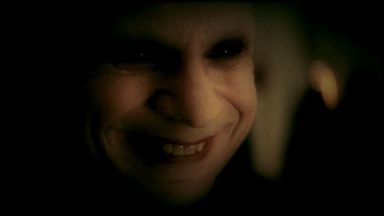
The universe of On the Air is a cartoonish, make-believe place, where a stagehand can fall from a high platform, dust himself off, and continue his business, and where one answered phone makes a quacking sound and another, which has an angry boss on the other end of the line, shoots flames. The burning air bursting from the receiver has no metaphysical Fire Walk With Me significance, just as the show’s characters naturally lack the resonant depths of Agent Cooper, Laura, Leland, and BOB. Still, the power of Lynch’s aesthetic is so strong and transferable that seeing Miguel Ferrer as Buddy Budwaller (whose verbally abusive manner easily reminds us of Ferrer’s Albert Rosenfield on Twin Peaks) holding a phone that’s flaming makes part of our brain think, “Oh my god! BOB’s calling!” 
Greg Olson/ David Lynch - Beautiful Dark
0 Comments


Leave a Reply.

    "A Love of UIQ": Félix Gutattari's Unfilmed Script
    Alejandro Jodorowsky - Dune 'The Movie You Will Never See'
    Barrage (2017)
    Before the Rain (1994)
    Blade Runner - A Camera on Violence: Reality and Fiction
    BLADE RUNNER 2049 AND ARRIVAL: a pedagogical cinema
    Brakes (2017) - Talks with Mercedes Gower
    COLUMBUS’ REVIEW: THE BEAUTY OF THIS MOTION PICTURE IS THE PICTUREn Text
    Darren Aronofsky - Mother! (2017)
    David Lynch - Night Town (Part 1)
    David Lynch - Night Town (Part 2)
    David Lynch - NIGHT TOWN (Part 3)
    David Lynch- NIGHT TOWN (Part 4)
    David Lynch -Head Like A House On Fire (Part 1)
    David Lynch - Head Like A House On Fire ( Part 2)
    David Lynch - Head Like a House on Fire (Part 3)
    David Lynch - Our SchoolGirl Of The Sorrows (Part 1)
    David Lynch - Our Schoolgirl Of The sorrows (Part 2)
    David Lynch - OUR SCHOOLGIRL OF THE SORROWS (Part 3)
    David Lynch - OUR SCHOOLGIRL OF THE SORROWS (Part 4)
    Dziga Vertov - The Man with the Movie Camera (1929)
    'Dune' (1984)
    Gabriel Range - Death of a President
    Germaine Dulac & Antonin Artaud - The Seashell and the Clergyman
    Inland Empire (2006)
    Ingmar Bergman - Hour of the Wolf/Vargtimmen (1968)
    Jean-Luc Godard - Alphaville (1965) (full movie)
    Jean Luc - Godard - Weekend
    Jean - Luc Godard - My Life to Live
    Jean-Luc Godard - Numero Deux ( Part 2)
    Jean -Luc - Godard - Numero Deux (Part 1)
    Jean-Luc Godard - Numero deux (Part 3)
    Jean-Luc Godard - Numero Deux (Part 4)
    Jean-Luc Godard - Breathless
    Mark Fisher - Existenzialism and Inhumanism
    Mark Fisher - eXistenZ and noncognitive labour
    McKenzie Wark - Edge of Tomorrow: Cinema of the Anthropocene
    MOTHERS (2010) by Milcho Manchevski
    DOMINICK SUZANNE-MAYER - No Country for Old Men and the Unavoidable Cycle of Greed and Violence
    No Country For Old Man - Cinephilosophy dialogue with Gabriele Guerra
    On the Milky Road (2016)
    PI (1998)
    Pier Paolo Pasolini - Salò (120 Days of Sodom)
    REWEIRDING ARCADIA
    Saltwater(2014)
    Silence (2016)
    Song To Song (2017)
    TERENCE BLAKE - ANAMNESIS AND ESTRANGEMENT (2): Jodorowsky’s DUNE
    The Death of a President interview with Gabriel Range
    The Dead Man 2 : Return Of The Dead Man (1994)
    The Dinner (2017)
    The Hours (2002)
    THE SPACE IN BETWEEN(2016)
    T2 Trainspotting (2017)
    The Daughter (2015)
    The Handmaiden ( Ah-Ga-SSI), (2016)
    The Other Side of Hope (2017)
    The Salesman (2016)
    The Young Karl Marx (2017)

    Archives

    December 2018
    January 2018
    December 2017
    November 2017
    October 2017
    July 2017
    June 2017
    May 2017
    April 2017
    March 2017
    February 2017

    RSS Feed

Powered by Create your own unique website with customizable templates.
  • OnScenes
  • News
  • Art
    • Music >
      • Album Review
    • Poetry
    • Film >
      • Filmmakers >
        • Movies
    • Theater >
      • TheaterMakers
  • Philosophy
  • PhiloFiction
  • Science&Technology
  • Economy
  • Media
    • Video
    • Audio
  • About
  • Contact
    • Location