OnScenes
  • OnScenes
  • News
  • Art
    • Music >
      • Album Review
    • Poetry
    • Film >
      • Filmmakers >
        • Movies
    • Theater >
      • TheaterMakers
  • Philosophy
  • PhiloFiction
  • Science&Technology
  • Economy
  • Media
    • Video
    • Audio
  • About
  • Contact
    • Location

Head Like a House on Fire (Part 2)

5/23/2017

0 Comments

 
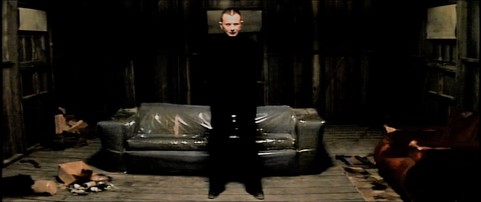
Lost Highway
Picture
Throughout the seven installments On the Air, no matter who wrote or directed them, there are flashes of Lynch’s sensibility. Characters on the show love (and sometimes nervously spill) coffee, and chew Chiclets gum (perhaps this is the gum that Twin Peaks’ Man From Another Place tells Cooper is going to “come back in style”). A woman traumatized by being on TV has a seizure in which she repeats “I forgot my purse; I forgot my purse,” recalling dying car accident victim Sherilyn Fenn in Wild at Heart (“My purse is gone; my purse is gone”). Fenn, like a number of Lynch’s female victims, had blood in and around her mouth; as The Lester Guy Show’s jittery makeup man tries to apply Betty’s lipstick before the big premiere, he gives her mouth area a similar red-stained look. The lipstick that crazily strays beyond its proper bounds also reminds us of madwoman Marietta’s lipstick face-painting fit in Wild at Heart. In one episode Betty, carrying a cloth sack, walks among a group of white ducks and says, “Who wants corn?,” recalling us of the corn manna that Fire Walk With Me’s entities BOB and Mike revere. And, also recalling Lynch’s Twin Peaks film, we see Betty wearing a white-winged angel costume, which underscores her role as a secular agent of goodness. Episode 6 finds Budwaller making a disparaging remark about guest magician the Great Presidio, whose grasp on reality seems tenuous, and whose words would fit perfectly in a film Lynch hadn’t even written yet (1997’s Lost Highway): “As far as I can ascertain, he thinks he’s an auto mechanic.” Presidio makes us think of BOB when he voices his fear of “a shadow walking the earth” and “the dog of transformation.” Presidio appears to be a charlatan, but to everyone’s surprise, he’s a true wizard who makes Lester Guy vanish and reappear in Akron, Ohio, where the episode ends with the repeating industrial-pounding sound of Eraserhead. 

Episode 7, co-written by Lynch with Robert Engels, is the most thematically interesting of the series, and gives On the Air a felicitous conclusion. By now, we know that Lynch loves the 1950s (specifically, he would like to live in 1956) and that he’s attracted by the decade’s melding of two polar qualities: the square and the hip, Eisenhower and Elvis, Norman Rockwell and Jackson Pollack, the Eagle Scout and the Northwest Surrealist. We recall the artist’s 1950s childhood when, nestled within a safe and nurturing family and a reassuringly stable sense of the world at large, he yearned for a counterbalancing power of disruptive wildness to manifest itself. Experiencing a broader spectrum of life as he grew up, Lynch learned that forces of transformation, disintegration, violence, and pain do dwell inside places and people. A tension between a secure status quo and the impulse to violate boundaries and limitations vitalizes Lynch’s creative expressions and shapes the way he likes to live: relaxed, yet alert within a supporting framework of ritualized habits and controlled occurrences, from which he can launch his consciousness to the farthest reaches of imagination and subconscious inspiration. 

The Surrealists of the early twentieth century opened up this fertile artistic territory, listening to their inner voices and seeing with their mind’s eye. In episode 7 of On the Air Lynch reverently evokes the names Man Ray and Marcel Duchamp, avant-gardists with whom he is “very happy to be a fellow traveler.” There’s plenty of chaos-producing transgressive energy coursing through the series’ first six episodes, but it’s all generated by the establishment culture of which The Lester Guy Show and the ZBC network are a part. On the Air’s last installment brings in something new: a beatnik counterculture element that introduces the spirit of art—and being—without limits. 

Into the studio comes a personification of Lynchian mystery dressed in a black leotard, the Woman With No Name (surely she is full of secrets). In her clothing of seamless night, she is clearly a member of 1950s Beat culture, but she also evokes the image of Irma Vep, the feline nocturnal criminal in French director Louis Feuillade’s landmark serial Les Vampires (1915–1916), who, with her black tights and brazen villainy, thrilled and inspired the young Surrealists. 

The Woman With No Name performs her uninhibited free-form dance to the untamed squawks and wails of the jazz group The Void, who are like abstract expressionist artists aggressively applying sounds instead of paint. Especially frenzied is the playing of the saxophonist, who, along with that earlier episode reference to an auto mechanic, foreshadows two of Lost Highway’s (1997) main characters. 

This installment of On the Air is the only one with a strain of true darkness, and contains the sole passage of sinister music that Badalamenti wrote for the show, which accompanies the inventor of the Voice Disintegrator’s boast that his machine could “start World War III in a matter of hours” by scrambling communications at the United Nations building. Lester Guy, of course, plans to use the infernal machine to obliterate Betty’s sweet singing and shoot down her rising star. (We note that in a 1966 episode of TV’s Batman, a show familiar to On the Air’s baby boomer creators, Catwoman wreaks havoc with her “Voice Eraser”25 machine.) This episode also reveals that hard-to-understand director Gochktck has a shoe fetish, and he thinks that the “beatnik” woman dancer is actually a “bootmaker,” so he falls headover-heels for her. The menacing Voice Disintegrator and Gochtck’s kinky sexuality establish a decidedly Lynchian tone, to which the director adds a coffee ritual (a white and an African American technician keep calling each other “my good friend” as they obsess over their java: “It’s very fresh!”), some wood (Lester Guy hides a microphone in a wooden planing tool to record Betty’s voice), and an anxious and despondent heroine (Betty is distressed because she can’t remember her mother’s first name).
Present in every episode, and introduced on the premiere that Lynch directed and co-wrote, is a character that personifies Lynch’s fascination for altered states of perception and consciousness. Blinky (Tracey Walters) the soundman has a condition called Bozeman’s Simplex that makes his visual field 25.62 times wider than ours. In our realm, he’s virtually blind and he navigates by touch and the help of his friends. But, beginning with episode 1, Lynch set the precedent of giving us a momentary peek at the world through Blinky’s extraordinary eyes. What we saw were a toy Santa Claus figure, a fuzzy toy dog, and a female doll. Blinky is an adult studio technician, not a toy salesman, so these images indicate the childlike innocence of his inner nature. The Santa Claus image reminds us of Wild at Heart Lula’s disturbed cousin Dell (Crispin Glover), who we saw wearing a Santa suit all year round and bemoaning the fact that “trust and the spirit of Christmas” are being destroyed by aliens from outer space. For Lynch, trust, love, the Christmas spirit, and the sincere goodness of a child’s viewpoint, are defenses against devouring forces outside and within us. 
​
​The impoverished art student who playfully dangled paper clips and colored bits of paper over his daughter Jennifer’s crib matured into an artist who reveres the freshness and wonder of the child’s world. Lynch began Blue Velvet with the viewpoint of a little person with young eyes looking up at swaying flowers and a white picket fence, in Lost Highway twenty-yearold Pete gazes over his backyard fence at a child’s wading pool and rubber duck, and The Straight Story’s (1999) middle-aged Rose regards a child’s pale rubber ball rolling down the sidewalk outside her window as night falls. The “child things” in Lynch’s work don’t always project a sunny mood, but usually they connote a sense of joy and unpolluted promise, as does the ten seconds of stop-motion animation the director crafted for a 1991 Japanese TV program about Twin Peaks. This snippet of film, which has never been shown in the United States, marks Lynch’s first return to animation since the days of Six Figures Getting Sick (1967; moving drawings), The Alphabet (1968; drawings and live action), and Eraserhead’s (1976) perky live-action worm. The Japanese segment shows familiar Twin Peaks touchstones (a piece of pie, a cup of coffee, a donut, two pine cones, Cooper’s mini tape recorder) happily circling around on a Double R Diner table top, while red and green Christmas ball ornaments dangle and dance above, with the parade of objects being accompanied by an orchestration of Twin Peaks music that includes jingling sleigh bells. The playful spirit of benevolent fellowship that informs Lynch’s gesture toward his Japanese fans also infuses his conclusion of On the Air. 
Viewing the show’s first six episodes, we’ve laughed at the characters’ vanities, egomaniacal rants, venal schemes, general foibles, shortcomings, and penchant for making big mistakes, and have recognized them as our own. As he did in Wild at Heart, Lynch is showing the mass of human​ity to be an unruly, messy, and confused lot, but human nonetheless. He has spoken of the way art-making helps one shape the chaos of life into a manageable form, and he illustrates his point in the finale of On the Air. As usual when The Lester Guy Show is broadcasting live, pandemonium reigns. Lester and Betty are dressed in 1920s flapper-era beach costumes for their big number, which fell apart when he tried to use the Voice Disintegrator on her and ended up reducing his own song to a croaking warble. Discombobulated Betty, still plagued by the fact that she can’t recall her mother’s name, stumbles onto the stage where The Woman With No Name is gyrating to wild saxophone sounds. Betty incongruously starts to sing her 1920s song, which involves the words “the good ship Queen Mary”—and she suddenly remembers that Mary is her mother’s name. Betty’s art has led her to the truth she’s been seeking, and it’s allowed Lynch to dramatically highlight the name of his lady love, Mary Sweeney, on national TV. 
​

Betty and the beatnik (the square and the hip, the old-fashioned flapperstyle entertainer and the cutting-edge performer) have shared Lynch’s On the Air stage, and now he makes room for Gochktck to express his erotic fixation. The Lester Guy Show director, joined by ZBC owner Zoblotnick himself, zealously deposits armloads of shoes at the feet of the Woman With No Name as though bringing offerings to a goddess. Then, after Lynch thoroughly emphasizes Gotchtck and Zoblotnick’s obsessive passion for footwear, Gotchktck declares his love for the “beatnik” (“bootmaker”). Then, while perennial loser Lester Guy is being consoled by his loving assistant and Betty is off calling her mother, Lynch leaves us with an egalitarian, everyone is included, Peaceable Kingdom finale. Labor and management, technicians and performers, all crowd onto The Lester Guy Show stage. Like children playing with their parents’ over-sized footwear, they put their hands inside shoes and raise them high overhead, swaying in unison with the Woman With No Name’s dance as the saxophone plays on into the night. Gochktck, his heart overflowing, signs off with a final, double-meaning pronouncement: “There’s no business like shoe business!”

In On the Air, as he did with Wild at Heart, Lynch shows us how messy and unpredictable life can be, though here he conveys the message with goofy humor rather than torture, murder, sexual power plays, and fatal accidents. The show is a decidedly good-natured work that corrals the darkness of human nature within a comic context, and it once again allows Lynch to express his respect for feminine wisdom. When everything’s going wrong in episode 1, golden-haired Betty saves the day with her sunny, asong-can-solve-any problem philosophy, which recalls Twin Peaks’ Gordon Cole’s (played by Lynch) credo, “Let a smile be your umbrella.” Betty’s tradition-revering character is also linked to hearth, home, and family-loving values. The concluding episode’s black-tressed Woman With No name incarnates the lunar feminine aspect, the undomesticated wild woman who, through the spontaneous movements of her body, expresses the flow of what she feels in the night air. Betty sang On the Air’s first love song, the Woman With No name leads its final dance, and so Lynch again honors both squaresville and the avant-garde, the twin poles of his worldview.
​
However, it seemed as though there were not that many people still interested in having David Lynch show them the world as he saw it. When ABC only broadcasted three, out-of-sequence episodes of On the Air and hastily ended the series, there was no protest movement calling for its return. Whereas when the network shifted Twin Peaks’ schedule back and forth and put the show on hiatus for a time, they were flooded with angry phone calls, faxes, and letters. In the summer and fall of 1992, Lynch learned that the populace didn’t care much for his TV show or his film (Twin Peaks: Fire Walk With Me), which was in theaters for just barely six weeks and lost an average of 60 percent more business each successive week of its release. The picture made just more than $4 million, which was less than its production cost and roughly equivalent to what a highly successful film would take in for a portion of a day’s ticket sales on its opening weekend.

The general climate of Lynch’s underappreciation spread still wider when, in his birthday month of January 1993, the pay-TV cable network HBO presented Hotel Room, the fledgling effort of Lynch’s own production company, Asymmetrical. This three-story, ninety-minute omnibus was executive-produced by Lynch and his friend Monty Montgomery, who helped produce Twin Peaks, Wild at Heart, and Industrial Symphony No. 1. Lynch directed episodes 1 (Tricks) and 3 (Blackout), both written by Wild at Heart novelist Barry Gifford, while director James Signorelli staged author Jay McInerney’s (Bright Lights, Big City) episode 2 story, Getting Rid of Robert. Each of the tales takes place in the same room of New York’s Railroad Hotel during a different decade. Hotel Room’s introduction, narrated by Lynch’s voice, defines the show’s concept in mystical-poetic terms. Mankind “captured” the “space for the hotel room” from the undefined flow of time, “gave it shape, and passed through.” And in passing through, people sometimes “found themselves brushing up against the secret names of truth.” Lynch, in his art and life, believes that there are abstract, hidden truths that can be easier sensed and felt than verbally named. And if verities are too glaringly obvious, he will use the eraser of his imagination to keep them floating, powerful, magical: something you inhale from the air rather than read as a computer printout. 

Tricks, set in 1969, is a challenging piece that requires that the viewer be an intuitive detective, as Lynch’s works often do. Gifford’s tale, in which Moe (Harry Dean Stanton) brings a prostitute (Glenne Headly) to the room, where he is later surprised by the arrival of his acquaintance Lou (Freddie Jones), fits perfectly with Lynch’s characteristic preoccupations. From 1968’s The Alphabet onward, the artist has shown a fascination for shifting realities and a fluid, boundary-crossing sense of human identity, the idea that this can also be that, that surface seeing can be misleading. In The Alphabet a voice tells us to “remember, you are dealing with the human form,” while we read an image of a face (a mouth beneath a nose) that is actually a face upside-down, with a false nose positioned on its chin: Lynch addresses the human form by shaping it with his art. The Grandmother’s Boy sprouts a strange botanical form from his shoulders and, in Eraserhead, Henry’s head pops off and is replaced by the wailing head of his burdensome mutant baby. The Elephant Man’s John Merrick is perceived to be a monstrous sideshow freak and a refined English gentleman, while his benefactor, Dr. Treves, sees himself as both a good and a bad man. Dune’s Paul Atreides feels himself to be a normal young man, but he is nonetheless inexorably becoming the messiah of an ancient prophecy. Blue Velvet’s Sandy isn’t sure if Jeffrey is “a detective or a pervert” as the wholesome youth starts living life on the dark side of town. Wild at Heart’s Sailor and Lula hide their shadow sides from each other, and in Industrial Symphony No. 1 a lovelorn woman (Laura Dern) grieves in a song cycle performed by her Dream Self (Julee Cruise). Twin Peaks shows masked identities, secret lives, and intruding supernatural dimensions to be as plentiful as fir trees. And in Lynch and Mark Frost’s unproduced script One Saliva Bubble, four main characters and thirty-five Texans and Chinese acrobats find that their identities have accidentally taken up residence in each other’s bodies. Lynch’s hotel room signals that it too will be a place where one’s self and sense of reality change and transform, for its number 603, which numerically adds up to nine—the nine that becomes six that becomes nine in the symbolic, eternal yin-yang cycle. 

Tricks is the first project Lynch staged that he did not write or co-write, but since he co-executive produced and directed it, and hence endorsed every word that is spoken, I will refer to him as the one guiding our experience of the piece. 

From the first moment that Moe and the prostitute Darlene walk into room 603, Lynch establishes the theme of doubled reality and identity. Moe calls her Arlene instead of Darlene, and he says things twice (“Okay, okay,” “Right, right,”; “You, you need to use the bathroom?”) He turns on a lamp with a two-stage motion, reaches for the room-service phone twice, and is disappointed that the room has single beds instead of a double. 

Moe and Darlene are rather wan and grey characters, whose life force is at low ebb. Lynch has brilliantly visualized them and room 603 (with its grey walls, carpets, and bedspreads, and sparse, outmoded furniture) to evoke the mood of melancholy and inertia that permeates the paintings of American artist Edward Hopper (1883–1967), whom the director greatly admires. Hopper portrayed transient lives momentarily frozen in interiors and landscapes that connoted a lonely stasis, a spiritual limbo. The name “Railroad Hotel” is probably an homage to Hopper’s famous painting House by the Railroad, and we note that room 603 displays photographs of speeding streamlined locomotives that comment ironically on the lives of hotel visitors who are going nowhere. We recall that Lynch, in Eraserhead and Twin Peaks: Fire Walk With Me, used the sound of a passing train to symbolize an elusive freedom for both Henry and Laura Palmer, who are trapped in a hellish existence.

Moe and Darlene are half-heartedly going through the motions of a john and a hooker about to transact business when a vital burst of energy knocks on the door. It’s Moe’s acquaintance Lou, whose arrival agitates and angers Moe, as he indicates in his double-speak way: “What’s Lou doing here, doing here now?” Lou, looking like a vibrant, lascivious Santa Claus with his bushy white hair and beard, takes control of the room and walks all over Moe, drinking his bourbon and fucking the woman he’s paid for, as Lynch focuses on Moe’s woebegone face and we hear Lou’s grunts of sexual exertion. A palpable tension between the two men remains in the air, but the balance of power shifts back and forth as they talk about Lou’s late wife, Felicia, and Moe brings up the Hollywood star Martine Mustique who, in this multiple-identity matrix, was really named Rema De Duguide, and who played the role of the Great Voukovara. 
We learn that Moe, Lou, and Darlene are vulnerable human beings who have each suffered losses, but the exact nature of Moe and Lou’s decadeslong antagonistic-yet-companionable relationship, with its strong half-defined emotions, remains tantalizingly mysterious. Everything the men say to each other seems to have an undefined double meaning, and Darlene says that they’re playing some strange kind of game she’s never seen before. Her notion that what Moe and Lou are engaged in is less than serious enrages Moe, and suddenly an unspoken threat of violence, even death, hangs over Darlene, who manages to slip out of the room when the maid comes to the door. Back inside the room, the men fraternally share the bottle of bourbon and say, “That was close,” and “It could have happened,” meaning, we almost got caught; we might have killed her. While Moe tells a story about the single occurrence of good luck in his life, Lou clandestinely slips a wallet into Moe’s coat. Then, saying “Are you coming? . . . Don’t wait too long,” Lou departs. Lynch fades in on a shot of Moe sleeping on one of the beds and being woken by a pounding on the door. It’s the police, who find Lou’s identification cards in the wallet, but with Moe’s picture on them. As the police get ready to haul him off to jail for the murder of Felicia, the bewildered and anguished Moe repeats himself: “No, no, I don’t understand, I don’t understand.” 
​

In Lynch’s work vivid worlds full of places, people, situations, and engaging, compelling emotions exist within the human mind. Eraserhead’s Henry can have encounters with the woman of his dreams that thrill both him and us while lying on his bed. For Lynch, dreams, visions, and intuitions can communicate at least as much truth as waking reality, and our intuition tells us that Moe and Lou are one and the same person. Moe is a cautious man with a heart condition who has nonetheless murdered his wife, Felicia, and perhaps Martine Mustique, who was found dead in her bathtub. Moe’s mind is unable to accept the fact that he perpetrated dark deeds, so it creates Lou, who mocks Moe’s heart trouble, goes about lustfully indulging his appetites and has the unrealistic, superhuman ability to intuit all the details of Darlene’s downward slide in life without ever having met her. The scenes we’ve seen with Moe, Darlene, and Lou have been a psychodrama that Moe has been living out while sleeping a boozy sleep in room 603. Perhaps earlier he did have a session with a prostitute, just him and her, but he experienced it as a situation in which the Lou part of his nature was a major player. The state of being in which Moe was interacting with a despised part of himself that was still him accounts for the curious, knowing looks between the two men and their edgy, yet comradely exchanges, and it explains why Moe angrily tells Darlene “Felicia was my wife” while Lou’s in the bathroom: Moe’s inner drama sees Felicia as wife to both the good and bad aspects of himself.  Lynch gives us a visual clue that Lou is an imaginary part of Moe’s psyche when he shows Moe and Darlene, who are talking to Lou, reflected in a mirror in which Lou does not appear. Lynch being Lynch however, he suspends us in a moment of perfect ambiguity, for the shot is angled so that if Lou was in the room he might be just barely too far to the left to be reflected. Lynch and writer Barry Gifford are intently focused on drawing the viewer’s imagination and intellect into their tricky cinematic puzzle box, and this twenty-six-minute episode of Hotel Room, as we shall see, introduces a particular identity-mixing dynamic that the two creators will explore at feature-length in 1997’s Lost Highway. 

One of Lynch’s artistic objectives is to probe the psychological depths of his characters, so it’s understandable that he would leave the direction of Hotel Room’s second episode, Getting Rid of Robert, to someone else (James Signorelli). This story, penned by Jay McInerney, the celebrated chronicler of Manhattan yuppiedom, inhabits an urbane world of socialclimbing golddiggers, catty comments, and cutting ironies that is foreign to Lynch’s sensibility. Set in 1992, this episode brings together bitchy Sasha (Deborah Unger) and self-absorbed Robert (Griffin Dunne) for a tryst in room 603. Before they arrive, we learn that they’ve both been cheating on each other. Director Signorelli, in order to herald the battle of the sexes that’s about to commence, cuts to a close-up of a bronze sculpture of two wrestlers grappling. It’s hard to imagine Lynch including such an obvious this-is-a-symbol moment in his own work. Sasha fully intends to initiate a break up with Robert, but he surprises her by saying he’s through with her and her egomaniacal emotional terrorism. This sudden power shift in the room throws Sasha off balance, and, rather than being cast as the loser, she tells Robert she’ll change her behavior in order to keep him. But his mind’s made up, he’s leaving, and to keep him from walking out the door, Sasha picks up a fireplace poker and smashes in the back of his head (cut to a still larger close-up of the sculpted wrestlers). In a dark variation on the classic screwball comedy theme of a couple’s verbal and physical combat actually being an expression of their affection for each other, Sasha says “You really hurt me,” Robert apologizes, and they start to kiss passionately. The only problem is that the contents of his head just won’t stop seeping out onto the tasteful beige carpet. This, their final, perverse embrace is the closest thing to love one can find in the mean-spirited world of Getting Rid of Robert, which serves as a black-comedy social-satire interlude before Lynch concludes Hotel Room with the masterful Blackout. 

Lynch’s direction of Barry Gifford’s story, like Getting Rid of Robert, also presents a couple under emotional duress, but unlike the Jay MacInerney– James Signorelli entry, Blackout employs a hypnotic stylistic simplicity that gently reveals the deep-rooted cause of its lovers’ disquietude. 

It’s a hot, muggy night in 1936, and all the lights are out in New York City. Danny (Crispin Glover), a young man from a small Oklahoma town, brings Chinese food back to room 603, where his wife, Diane (Alicia Witt), waits for his return with just a few candles glimmering in the black air surrounding her. Beyond this tale’s literal darkness, Blackout explores the primarily Lynchian theme of the absence of light in the human soul. When we first see Diane, she’s holding her hand over her eyes to shield them from Danny’s bright flashlight beam, but she’s also trying to keep a past horror from registering and being retained in her mind’s eye. It’s immediately clear to us that something is not right with Diane; her grasp of reality is tenuous as she muddles the time scheme of events in her and Danny’s seventeen married years and wonders if he’s been speaking Chinese and if it’s a Chinese doctor she’ll be seeing tomorrow, to which her patient husband replies, “The only thing Chinese is this food. 

Danny speaks slowly, carefully choosing his words as he talks to Diane, as though he’s speaking to a child; and with her almost plump, smooth, fleshy face and full lips, she suggests a very young, innocent person new to the grown-up world, yet her wide, unblinking eyes are haunted by too much experience. In the eerie darkness, Danny looks at his wife as he talks to her, but her gaze trails off into her own inner reality: She’s one of Lynch’s living mysteries who commands our attention as we try to understand and soothe her. The first nine minutes of the half-hour Blackout are a textbook example of the director’s ability to create a floating, mesmerizing journey for the viewer. We’re entranced by the two people speaking softly, cryptically in the blackened room, their words almost subliminally supported by Angelo Badalamenti’s spellbound musical tones. We’re gripped by the ancient power of storytelling as Diane speaks of walking by the black waters of a nocturnal lake (Did this really happen; is it a dream she had?). Then, after pausing for a rapt sixteen seconds, she says, “I saw you on the other side of the lake,”—and suddenly screams out, “And I shouted, Danny, Danny, but it wasn’t you.” Diane’s panicky outburst shows the severity of her psychological torment, and we feel the terror of a woman wandering like a lost child within her own mind. But Lynch, by having Diane suddenly half-rise from the stable sitting position she’s established, and lurch toward Danny as she screams his name, makes us fear Diane herself: She becomes a startling presence of true Otherness. The fearsome spectacle of Diane’s mental anguish gives a full measure of the burden Danny gladly, but wearily bears in living with and trying to help this woman he loves so much. Like a detective, he tries to decipher the clues of dislocated sentences and strange images she presents so that he can map a pattern of cogent narrative that will help guide her home.  

​One of Lynch’s “special people”27 with an extraordinary consciousness, Diane has visions that are at once mystical, poetic, and reality based. She speaks of a Chinese fish that jumped up from the black waters of a lake and spoke to her of Danny and their “five perfect girls.” We, like Danny, see that the Chinese fish comes from their earlier talk about Chinese food, and the nighttime lake setting recalls the many evenings they spent at Lake Osage back home. But what of the five girls, for Diane insists, “Danny, these are our children; don’t you recognize them?” Gently, he leads her back to the terrible truth she’s trying so hard to separate herself from through dissociative denial and fantasy. The couple once had a child, a baby boy they nicknamed Danbug, who drowned in Lake Osage while they were preoccupied making love on the shore. What tragedy, to have the loving act of intimacy that produced their child also metaphorically snuff out its present and future. This trauma was compounded by the pitiless attitude of townsfolk who said Diane wasn’t responsible enough to mother children, and the medical fact that she could never have any more. So, her vision of her and Danny’s five girls was both a healthy rebuke to their neighbors’ condemnatory stance and a sad defiance of her physical inability to conceive again. 

Diane felt that the whole unspeakable mess “stuck in my brain like a knife” (still another Lynchian head trauma), thus distorting her rational thought process. Pain, sorrow, and shame are her constant companions, even though she tries to bury them beneath her conscious mind, and Lynch stages a beautiful poetic association between the thought of Diane and Danny’s drowned baby and the blackness-reflecting mirror in Room 603 which, framed left and right by two burning white candles, is like an altar to their loss. Barry Gifford’s spare writing, Lynch’s economical, unshowy direction, and the subdued performances of Crispin Glover and Alicia Witt present this highly emotional material in an unsentimental, Midwestern-dry idiom that gives certain dramatic moments great force—as when the almost otherworldly Diane jerks her hand out to touch Danny’s shoulder and says, “I couldn’t live without you, Danny, I . . . I really couldn’t.” Diane felt that the whole unspeakable mess “stuck in my brain like a knife” (still another Lynchian head trauma), thus distorting her rational thought process. Pain, sorrow, and shame are her constant companions, even though she tries to bury them beneath her conscious mind, and Lynch stages a beautiful poetic association between the thought of Diane and Danny’s drowned baby and the blackness-reflecting mirror in Room 603 which, framed left and right by two burning white candles, is like an altar to their loss. Barry Gifford’s spare writing, Lynch’s economical, unshowy direction, and the subdued performances of Crispin Glover and Alicia Witt present this highly emotional material in an unsentimental, Midwestern-dry idiom that gives certain dramatic moments great force—as when the almost otherworldly Diane jerks her hand out to touch Danny’s shoulder and says, “I couldn’t live without you, Danny, I . . . I really couldn’t.” 

The couple can never produce another child, but Danny labors day and night to achieve the rebirth of his wife, to bring the mind and body he loves into a healthy balance and restore Diane to herself and to him. He’s tried as hard as he can to find the bright side of their travails, but he feels desperate and “useless.” He’s afraid that part of her wants to keep wandering in the dark, for she says of their blacked-out hotel room, “I could get used to this.” Danny knows that she already has. Still, maybe the New York doctor can work miracles. 

Like so many of the people in Lynch’s work, Diane and Danny are in danger of being overwhelmed by a world of trouble and confusion: They are in need of deliverance and grace. Now, on top of everything else, Diane has a burning fever, but she wants Danny to kiss her anyway as she lies on the bed. He hasn’t been afraid to confront the dis-ease of her mind, and he doesn’t shy away from her body, leaning down to touch his lips to hers. Their kiss signifies the reestablishment of the erotic circuit between them that was sundered by the death of their love’s child—and at this moment, the lights ​come on. Even the bed headboard’s carved art-nouveau plant forms, which are now illuminated, herald growth and renewal. Like tender shoots turning toward the nurturing light, Danny pulls Diane off her sickbed and to the window, where their faces glow with reflected brilliance. He says, “Look, Di, the whole city’s lit up,” and, her smile mirroring his, she says the word that has brought light to her world like a benediction: “Danny!”
This ending, in which rays of transcendent love brighten benighted lives with an exaltation of hope, is spiritual kin to the conclusion of The Grandmother, Eraserhead, The Elephant Man, Dune, Blue Velvet, Wild at Heart, Twin Peaks: Fire Walk With Me, and On the Air, and speaks to Lynch’s optimistic belief in the intervening power of goodness. Danny and Diane’s illumination especially recalls the moment in Blue Velvet when Jeffrey, having extinguished Frank Booth’s evil energy with a bullet, pauses with his loving Sandy in an apartment hallway. Like Danny and Diane, they kiss beneath the glow of a regular ceiling-mounted light source, but as Lynch fades the scenes in both films, he bathes his lovers in a supernaturally bright, poetic light that comes from all directions at once.
​
Hotel Room displayed Lynch’s ability to compellingly direct material bounded by the parameters of a single stage set, as in one of those special stage-curtained areas within his other films and artworks, where certain moments and dramas are given special attention. The HBO program also found Lynch exploring favorite, primal themes like the fluidity of human identity and the conjunction between anxiety, eroticism, and death. Lynch and his co-producer, Monty Montgomery, conceived Hotel Room as an ongoing series, but HBO confined it to the one, low-rated installment. In a period of just seven months, Lynch had to cope with the fact that Twin Peaks: Fire Walk With Me, On the Air, and Hotel Room were deemed to be critical and financial failures. Naturally, it was painful to have work he put so much of himself into rejected by the masses who had celebrated him not so long ago. But, following the lead of many of his fictions, he philosophically concluded that rebirth follows death, and set about bringing himself back to creative life. Instead of feeling trapped and blocked, he realized that he had the freedom and the expressive talent to travel some avenues other than feature films and television shows.
​In the five years between Twin Peaks: Fire Walk With Me (1992) and Lost Highway (1997), Lynch felt honored to exhibit his paintings, drawings, and photographs in solo shows at galleries, museums, and city halls in Valencia, Spain; Paris; twice in Los Angeles; and in four Japanese cities including Tokyo. Despite his meager performance in the film-revenue grosses department, his reputation as a cinematic artist remained high. Prestigious international firms sought him out to shoot their commercials, which helped maintain a positive cash flow for Lynch, Mary Sweeney, and little Riley, and kept Asymmetrical Productions, housed in a compact former home next to his own Hollywood Hills abode, busy. 

It’s fascinating to see how the director’s advertisements bear the brand of Lynch as well as the name of the particular product. In “Opium” for Yves Saint Laurent, he emphasizes the dreamy interior of a private sensual experience by gliding his camera into the black opening of a perfume bottle and dissolving through a wavy dark curtain of Asian plum blossoms, to focus in close-up on a woman titling her head back with eyes closed and touching her perfumed fingers to her throat as Angelo Badalamenti’s music climaxes. For Calvin Klein’s Obsession perfume, Lynch interpreted four short, romance-themed quotes from the fictions of F. Scott Fitzgerald, Ernest Hemingway, D. H. Lawrence, and Gustave Flaubert, and he managed to work Twin Peaks actors Heather Graham, Lara Flynn Boyle, and James Marshall into his mix. A couple kisses against a field of stars, a pining lover’s eye fills with a huge tear as lightning flashes, we hear a wind of mystery, and, as we’ve seen so often in Lynch’s work, lovers touch and hold each other’s faces as they kiss (D. H. Lawrence: “To gather him in by touch”). The artist’s love of Southern California’s modern architecture is even in evidence, as we note the Mayan brick walls of a Los Angeles Frank Lloyd Wright house behind the Obsession bottle. 
​
Mystery and revelation permeate Lynch’s work, and in “Reveal,” for the American Cancer Society, a pleasant-looking sixty-year-old woman with a neutral expression strips to her brassiere to encourage older women to have mammograms, her blouse’s mother-of-pearls buttons reflecting the brilliant blue of her eyes. “The Wall” for Adidas athletic shoes shows a male runner’s head distorting as he strains at his task and, via a close-up of his ear, we go inside to see his red-pink cells laboring hard. Lynch dives his camera down the man’s screaming throat, where fires burn and, after the runner bursts through a literal wall, he serenely strides along in the clouds. Another Lynchian character has persevered and gone from hell to heaven. A young woman’s head floats in the clouds after “breaking free” from her cold, thanks to Alka-Seltzer Plus. And in “Sun, Moon, Stars” (for Karl Lagerfeld’s new perfume), Darryl Hannah is in two places at once, both dreamily wishing while looking skyward, and floating among the stars, her pale hair and dress streaming in a gorgeous flow of celestial images that dissolve from one to the next. Lynch employs earthier motifs in “Instinct of Life,” which heralds Jil Sanders’ masculine eau de toilette fragrance. We see the director’s favorite red curtains, a candle blowing out in a Now-It’s-Dark moment, and the linkage of human and bestial energy as a man and a black panther race through the night. favorite red curtains, a candle blowing out in a Now-It’s-Dark moment, and the linkage of human and bestial energy as a man and a black panther race through the night.  
​
The extended, sixty-second commercial Lynch filmed for Giorgio Armani’s perfume Gio is the director’s personal favorite, and it contains this apolitical artist’s most blatant political statement. Lynch has lived in Los Angeles since 1970, and he dearly loves his adopted hometown, but his acute perceptions can’t help but notice its troubling fault lines. In the late 1980s and early 1990s, fear and animosity clouded the air as racial tensions approached the flash point. Gang warfare and drive-by shootings were commonplace; many Asians, African Americans, and whites regarded each other with mistrust. The police beating of black motorist Rodney King reinforced prejudices on both sides of the color line, and the trial of the officers who wielded the clubs galvanized intense emotions. It was during this time of charged racial feelings that Lynch shot the Armani commercial (in black and white), which is driven by the question “Who is Gio?” 
Another Lynchian woman of mystery, she moves in a social circle of wealth and taste, turning heads wherever she goes, being photographed by the paparazzi, and kissing various men. Universally adored, she seems to have it all, but her moody eyes often gaze right or left out beyond her immediate environment, looking for something more to complete her life, or perhaps seeing something she’s trying to forget. She often wears a subdued expression, but she really comes alive in an extended music club sequence in which, as Lynch says, “all races and religions are getting along so fantastically.”30 Gio and a huge multiethnic group of musicians, dancers, and photographers all swing and sway to a hot salsa beat in a production number of harmonized opposites that recalls On the Air’s big beatnik-shoe-dance-number finale that unified the disparate factions of the Zoblotnick Broadcasting Company. Ironically, Lynch shot his Gio dance scene, which anticipates the spirit of Rodney King’s famous and haunting question, “Can’t we all just get along?,” on the very night that the L.A. riots broke out. Earlier in the day, the California judicial system dismissed the men who beat King with a slap on the wrist, and by nightfall there was rampant looting and property destruction in the ghettos of the South Central neighborhoods. What Lynch calls “the strangeness”31 quickly spread around town and soon “they were setting fire to Hollywood Boulevard”32 and there were “five thousand fires burning.”33 The artist has spoken of how he found the “drastically out of control”34 feeling of the L.A. unrest “very unnerving.”35 Lynch’s art tells us how deeply he understands the human capacity for physical and emotional violence, but to see so many people acting out their darkest impulses was a very scary and saddening sight. In the middle of his commercial’s happy dance, Lynch cast a brooding shadow over the scene, as Angelo Badalamenti’s synthesizer strikes a somber note and Gio’s wistful gaze, for the first time, looks right at us. When evoking Gio’s melancholy, Lynch may have had the real-life supermodel Gia Carangi (1960–1986), at one time a $10,000-a-day Vogue model, in mind. An international fashion- and party-world sensation, Gia was wracked with emotional pain, slid into heroin addiction, and was one of the first American women to die of AIDS.
 
Lynch revisited the world of Twin Peaks in four thirty-second commercials for Japan’s popular Georgia Coffee. Only shown in Japan, each segment works as an independent episode in which Agent Cooper enthusiastically endorses pop-top cans of Georgia Coffee and gives a hearty thumbs-up gesture. Taken together, the four segments tell a story about Cooper’s efforts to locate Isami, a missing young Japanese woman, and reunite her with her boyfriend, Ken. Cooper’s investigation is aided by the TV series’ Officer Hawk, Deputy Andy, receptionist Lucy, and the Log Lady, and the segments include familiar motifs such as cherry pie, Cooper saying “Damn fine coffee,” a taxidermy deer head on a conference table, and the Log Lady switching the lights on and off. Lynch was concerned that portraying the Twin Peaks realm in a light-hearted vein might destroy its somber, hypnotic magic, but Cooper manages to give us a dark thrill when, surrounded by a nocturnal forest, he soberly intones, “The Black Lodge is not in this world.”
​Greg Olson/David Lynch - Beautiful Dark
0 Comments


Leave a Reply.

    "A Love of UIQ": Félix Gutattari's Unfilmed Script
    Alejandro Jodorowsky - Dune 'The Movie You Will Never See'
    Barrage (2017)
    Before the Rain (1994)
    Blade Runner - A Camera on Violence: Reality and Fiction
    BLADE RUNNER 2049 AND ARRIVAL: a pedagogical cinema
    Brakes (2017) - Talks with Mercedes Gower
    COLUMBUS’ REVIEW: THE BEAUTY OF THIS MOTION PICTURE IS THE PICTUREn Text
    Darren Aronofsky - Mother! (2017)
    David Lynch - Night Town (Part 1)
    David Lynch - Night Town (Part 2)
    David Lynch - NIGHT TOWN (Part 3)
    David Lynch- NIGHT TOWN (Part 4)
    David Lynch -Head Like A House On Fire (Part 1)
    David Lynch - Head Like A House On Fire ( Part 2)
    David Lynch - Head Like a House on Fire (Part 3)
    David Lynch - Our SchoolGirl Of The Sorrows (Part 1)
    David Lynch - Our Schoolgirl Of The sorrows (Part 2)
    David Lynch - OUR SCHOOLGIRL OF THE SORROWS (Part 3)
    David Lynch - OUR SCHOOLGIRL OF THE SORROWS (Part 4)
    Dziga Vertov - The Man with the Movie Camera (1929)
    'Dune' (1984)
    Gabriel Range - Death of a President
    Germaine Dulac & Antonin Artaud - The Seashell and the Clergyman
    Inland Empire (2006)
    Ingmar Bergman - Hour of the Wolf/Vargtimmen (1968)
    Jean-Luc Godard - Alphaville (1965) (full movie)
    Jean Luc - Godard - Weekend
    Jean - Luc Godard - My Life to Live
    Jean-Luc Godard - Numero Deux ( Part 2)
    Jean -Luc - Godard - Numero Deux (Part 1)
    Jean-Luc Godard - Numero deux (Part 3)
    Jean-Luc Godard - Numero Deux (Part 4)
    Jean-Luc Godard - Breathless
    Mark Fisher - Existenzialism and Inhumanism
    Mark Fisher - eXistenZ and noncognitive labour
    McKenzie Wark - Edge of Tomorrow: Cinema of the Anthropocene
    MOTHERS (2010) by Milcho Manchevski
    DOMINICK SUZANNE-MAYER - No Country for Old Men and the Unavoidable Cycle of Greed and Violence
    No Country For Old Man - Cinephilosophy dialogue with Gabriele Guerra
    On the Milky Road (2016)
    PI (1998)
    Pier Paolo Pasolini - Salò (120 Days of Sodom)
    REWEIRDING ARCADIA
    Saltwater(2014)
    Silence (2016)
    Song To Song (2017)
    TERENCE BLAKE - ANAMNESIS AND ESTRANGEMENT (2): Jodorowsky’s DUNE
    The Death of a President interview with Gabriel Range
    The Dead Man 2 : Return Of The Dead Man (1994)
    The Dinner (2017)
    The Hours (2002)
    THE SPACE IN BETWEEN(2016)
    T2 Trainspotting (2017)
    The Daughter (2015)
    The Handmaiden ( Ah-Ga-SSI), (2016)
    The Other Side of Hope (2017)
    The Salesman (2016)
    The Young Karl Marx (2017)

    Archives

    December 2018
    January 2018
    December 2017
    November 2017
    October 2017
    July 2017
    June 2017
    May 2017
    April 2017
    March 2017
    February 2017

    RSS Feed

Powered by Create your own unique website with customizable templates.
  • OnScenes
  • News
  • Art
    • Music >
      • Album Review
    • Poetry
    • Film >
      • Filmmakers >
        • Movies
    • Theater >
      • TheaterMakers
  • Philosophy
  • PhiloFiction
  • Science&Technology
  • Economy
  • Media
    • Video
    • Audio
  • About
  • Contact
    • Location