OnScenes
  • OnScenes
  • News
  • Art
    • Music >
      • Album Review
    • Poetry
    • Film >
      • Filmmakers >
        • Movies
    • Theater >
      • TheaterMakers
  • Philosophy
  • PhiloFiction
  • Science&Technology
  • Economy
  • Media
    • Video
    • Audio
  • About
  • Contact
    • Location

NIGHT TOWN (Part 1)

6/11/2017

0 Comments

 
by  Greg Olson 
(Blue Velvet)
Picture
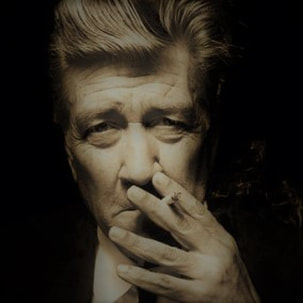
David Lynch was lost. He fastened the top button of his white shirt every morning, but tendrils of panic and confusion snaked their way into his chest. How could his second attempt at sustaining a marriage be slowly withering? How could Dune turn out so bad? He couldn’t understand how his thoughts and feelings, which he seemed to know so well, could be so at odds with each other, so scrambled. He experienced the way “you can play tricks on your mind, or your mind can play tricks on you, and it keeps you from seeing what’s really happening. I don’t know.”
​Lynch continued to reside with Mary and Austin, but his soul needed to find a home. In The Grandmother, Eraserhead, and The Elephant Man, the director provided the flagging, downtrodden spirits of his heroes with a locus of solace and creative growth. Even Paul Atreides, who had to exchange his lush home world for a barren desert, found on Dune a place and people that nurtured and expanded his being. The director needed to go where, as Robert Frost said, “When you go there, they have to take you in.” A place where the voices of criticism and failure would fade into the silence of his inner peace. Where he could rediscover the ideas and reveries and sudden insights that had guided him to so much good work in the past, and know that he was following the true and only path of his art. 
Lynch once said, “If you cut my father’s leash, he’d run straight into the woods,” where he had spent so much time communing with nature and studying the diseases that blighted healthy plants. Well, now the director was free of the leash that, if Dune had been successful, would have bound him to the task of making two mega-epic sequels. In his imagination, Lynch joined his father and headed for the trees. His mind dwelt in the Northwest lumbertown realm of his Spokane, Washington, and Sandpoint, Idaho, childhood, in the comforting innocence and security of the 1950s. Lynch didn’t want to get on a jet and fly across the country to the actual towns of his youth, for if he saw the real locations “too clearly it would destroy the imaginary picture” that had formed so evocatively in his head. And it would be Dino De Laurentiis, of all people, who would help him go home again.  
The mogul had established his De Laurentiis Entertainment Group operation 200 miles south of Lynch, Mary, and Austin’s Virginia home, in Wilmington, North Carolina. How perfect that the production family and the director of the calamitous Dune would shake hands on another deal in the treacherous hurricane country near Cape Fear. Lynch wasn’t afraid to work with Dino again since he had comprehended the lesson of his threeand-a-half-year Dune ordeal: “The right of final cut is crucial.” Lynch would be getting a much-reduced director’s fee and a production budget one-tenth the size of Dune’s. But for the first time since Eraserhead, he would be filming a story that sprang totally from his own subconscious; he would pick his own crew and actors and locations, and, as when he stood in front of one of his paintings, only he would know when the film was complete, and there it would end.
Lynch’s Dune producer, Raffaella De Laurentiis (looking back from 2003), realized that due to the monstrous size of the production, the pressures of time and meeting budgets, “David had to give up his creative freedom.” (Lynch also had a problem with the way Raffaella, while working on Dune, was simultaneously producing Richard Fleischer’s Conan the Destroyer on nearby Mexican soundstages. Once, when she left Lynch to visit Fleischer, David’s face went white with anger.) She remembers that after Dune Lynch “said he’d never do another big movie, and he never has. He’s been really happy doing smaller films: he’s found his niche, the thing he loves doing.” Blue Velvet would begin (or reinstitute, á la Eraserhead) Lynch’s felicitous outpouring of human-scale, deeply personal cinema. 
​Like Eraserhead, Blue Velvet would be synthesized from the substance of Lynch’s life. The director’s first feature film was built upon his experience of Philadelphia as an urban hell; his queasiness about procreation and fear of fatherhood and the freedom-restricting responsibilities of family life; his dealing with the fact of his own daughter, Jennifer, being born with clubfeet; and his belief in the powers of spirit and imagination to deliver us from earthly turmoil. Blue Velvet would portray the artist’s base and lofty obsessions.
Having suffered the dilution and disintegration of his personal vision while toiling on Dune, Lynch sighed with relief as he returned to his primal first principles in Blue Velvet. The famous, iconic opening image of the film, in which the low-positioned camera looks up at red tulips bobbing against a white picket fence with blue sky beyond is, for former Spokane tyke Lynch, specifically “a child’s view”8 of an archetypal red-white-and-blue American tableau. Not only would Lynch’s small-town roots be displayed in his new film, but this very private man would expose, and own up to, one of his own transgressive daydreams. “I always had this fantasy of sneaking into a girl’s room, hiding, and observing her through the night.”
There have been secrets in the director’s films from the earliest days: The Grandmother’s Granny hidden up in the attic, where she and the Boy share a clandestine life removed from his abusive parents; Eraserhead Henry’s intimate bond with the Lady in the Radiator, a private treasure he keeps from his wife; The Elephant Man’s sweet and cultured soul, which is masked by the brutish monstrosity of his deformed flesh; and the concealed cosmic truth that Dune’s Paul Atreides is the prophesied messiah. Secrets aplenty, but, beginning with Blue Velvet, Lynch will forcefully make secrets and mysteries the declared subject of his work, something that his characters both live out and talk about. The elusive director, with unconscious selfrevelatory humor, acknowledged his fascination with hidden verities in the year of Blue Velvet. When asked if he was secretive, the director responded, “That’s a possibility, yeah.”
Lynch had carried around his fantasy of spying on a girl in her room at night since the early-1970s time of Eraserhead. Like a magnet, this story element attracted bits of the director’s imagination over the years. Jeffrey, the young man who was the girl-watcher, would see a puzzle piece from a murder mystery in her room. In a field, he would find a severed ear that would take him to the police. He would become involved with the policeman’s pure-hearted daughter, then also the darkness-tainted woman he had spied on. He would make a fearsome night journey from innocence to experience, discover that his tranquil town has a noxious underside, battle the forces of evil, and wonder if that evil stirs within his own heart.
Since the creation of Blue Velvet’s scenario was a gradual process, Lynch had plenty of time to talk about the project with his cinematographer friend, Fred Elmes. The two had met in 1971 when they attended classes at the American Film Institute’s Center for Advanced Film Studies in Beverly Hills, and it was Elmes who had realized on film the evocatively dark-charcoal-andebony Eraserhead imagery that brooded within Lynch’s mind. Lynch and Elmes’s hours of Blue Velvet talk proceeded from the general to the specific. ​What would the town look like? What do people do in this town? What’s the feeling in Dorothy’s strange apartment? What color makes it strange?
​While determining the final shape of his story and its setting, Lynch set about casting Blue Velvet’s principal roles. Who better to portray Jeffrey Beaumont, an adventurous youth on the verge of manhood, than Paul Atreides himself: Kyle MacLachlan. Dune remained an emblem of negativity in Lynch’s mind but the director greatly admired his lead actor’s abilities. He felt MacLachlan possessed abundant mental and physical prowess, and projected both spiritual depth and innocence. He also knew that Blue Velvet, unlike Dune’s ponderous, magisterial narrative, had passages in which MacLachlan’s boyish zeal and quirky playfulness could shine through.
​The young actor wasn’t feeling very frisky after Dune came out. The film’s failure dissolved his six-picture contract with De Laurentiis, and he fell into a dark depression in which he questioned everything he was doing. Aside from sharing Lynch’s post-Dune blues, MacLachlan agreed with his friend and director’s post-mortem of the Dune problem: Given half a chance, studio bosses will fold, spindle, and mutilate your artistic vision. Oliver Stone offered MacLachlan a leading role in the much-anticipated production of Platoon, but the actor stayed on Lynch’s wavelength and waited for Blue Velvet to gear up at its own proper time. The Platoon role turned out to be Charlie Sheen’s breakout part, but MacLachlan felt that Blue Velvet’s Jeffrey made a far more fascinating journey than the comparatively undeveloped lead character of Platoon. 
Sharing Jeffrey’s journey is the immaculate Sandy, police detective’s daughter and, for Lynch, “the most beautiful, popular girl in high school." The director rhapsodizes in his inimitable way, “If you wanted to buy a bottle of innocence as a shampoo, you’d buy Sandy.” Sweet smelling and pure of heart, Sandy is nonetheless the one who facilitates Jeffrey’s Walpurgis Night trip into a lethal small-town netherworld. 
​MacLachlan’s film career was still in its fledgling stage, and he wanted his parents to be involved in the process he was going through, so he gave each of them a copy of Lynch’s Blue Velvet script. “I wasn’t too worried about my dad, but my mom was going through chemotherapy for ovarian cancer. She was very sensitive, very protective, and felt like her baby was getting into something that she was very concerned about. But I trusted David, and I finally said to her, ‘You’re going to have to be okay with this.’ It was about being able to say to her, ‘This is really important to me,’ and her being okay with that. She died before the film came out, ironically.”13 So for both Jeffrey Beaumont and Kyle MacLachlan, Blue Velvet was a maturing, coming-of-age experience of independence from loving parents.
Lynch had talked to just about every young actress in Hollywood and still hadn’t found his high school sweetheart. He was growing impatient and frustrated when in walked Laura Dern. Or rather, Dern was sitting on the hallway floor outside the director’s office when Lynch dropped an earthy greeting as he hurriedly strode past her, “Hey, I gotta go pee. I’ll be right back.” As Dern recalls, Lynch’s job interview technique was casual as usual. “We talked about everything, from meditation to movies to clothing designers to lumber,”and the director simply “decided he wanted me to be in the movie.”16 Lynch needed his new leading lady and leading man to get to know each other, so he initiated Dern and MacLachlan into one of his favorite rituals of creativity: lunch at Bob’s Big Boy. 
Sitting in his favorite restaurant, eating the burgers and fries and milkshakes he had loved as a kid in the 1950s, and dreaming about a film that would have the feel of that cherished era, Lynch felt his post-Dune malaise start to lift. For years, the artist had sat in this clean, well-lighted place, sketching images and jotting words onto paper napkins, doodlings that became paintings that hung in galleries and collectors’ homes, and films that people throughout the world respected. As a boy, Lynch had loved “building forts”17 with “lots and lots of friends.”18 Now, after being crushed underfoot by the relatively impersonal behemoth that was Dune, the artist would, as he did with Eraserhead, be building a deeply felt film with a human-scale circle of friends. The burger griddle was hot that day at Bob’s, and Dern and MacLachlan sparked some warmth of their own, for their meeting generated a romance as well as one of the most notorious films of the 1980s. 
So Lynch had found his Sandy, blonde angel of love and light, but where was Dorothy, the dark lady of pain and sorrow? In a serendipitous way, Dino DeLaurentiis would provide her. One night in New York, Lynch and a male friend were having dinner in Dino’s restaurant, Allo Allo (the words the producer uses to answer the phone). Humphrey Bogart was not the nightspot’s host, nor was Dooley Wilson playing “As Time Goes By” on the piano, but Casablanca was on Lynch’s mind as he regarded an uncommonly beautiful woman across the room, who was dining with Dino’s wife. “Would you look at her, she could be Ingrid Bergman’s daughter,” the awestruck director said to his friend. “You idiot, she is Ingrid Bergman’s daughter”20 was not only the reply, but also the answer to what Lynch needed—both as an artist and as a man. 
Thirty-three-year-old Isabella Rossellini was indeed the daughter of actress Ingrid Bergman (1915–1982) and Italian film director Roberto Rossellini (1906–1977), whose union had caused one of Hollywood’s most ​notorious scandals. In 1949, Bergman, at the height of her Hollywood success and near sanctification by adoring moviegoers, left America, and her husband and child, to make films with Rossellini in Italy. She divorced her spouse, married Rossellini after becoming pregnant by him, had three children with him (including Isabella), was vilified by the American media, and condemned in the halls of Congress. In the late 1950s, after divorcing Rossellini, Bergman was finally welcomed back by the American public and Hollywood moviemakers. 
​Isabella Rossellini—who, with her twin sister, Ingrid, was born in 1952—was insulated from the harsh winds of vilification that swirled around her mother. She enjoyed a happy childhood near Rome with lots of friends and pets and games. When it was time for the afternoon siesta she could never fall asleep, so she lay there quietly, daydreaming—sounds like a simpatico playmate for a younger David Lynch. Blessed with her mother’s moon-faced beauty (she’s been called one of the most lovely women in the history of the world), Isabella began modeling as a teenager, and she let loose her playful spirit performing on the Saturday Night Live–like Italian TV comedy The Other Sunday, for which she also filmed offbeat reports on notables such as Muhammad Ali and director Martin Scorsese. She was married to Scorsese for three years (1979–1982), acted in A Matter of Time (1976), Il Prato (1979), and White Nights (1985), and became the exclusive spokeswoman and representative image for Lancôme cosmetics. She had another short marriage, to filmmaker Jonathan Wiedemann, with whom she had a daughter, Elettra-Ingrid, in 1983. 
Even before meeting Lynch, Rossellini had been swept away by his Blue Velvet screenplay. The script opened up “a world of deeper truths,” and courageously portrayed “the reality of abused women, the many layers, the horrible twists, the unclear emotions.” The character of Dorothy was an actress’s dream: a “beautiful broken doll,” a tarnished-glamour façade that masked “shadings of desperation, helplessness, madness.”
Rossellini felt a kinship with the world of Lynch’s art, and the director’s intuition was quick to recognize her as Blue Velvet’s perfect Dorothy. She seemed to embody the very words of his script: the ripe, thirty-something sexuality of a woman who has borne a child, the “beautiful full figure, dark eyes, black thick wavy hair, full red lips.” The blooming, ruddy lips that had whispered Blue Velvet into being in Lynch’s mind were now breathing and speaking before his eyes; Rossellini understood him so well. She saw Lynch as both “serene, happy, well-adjusted,” and obsessed with “the dark side, the inexplicable, the mystery.” She marveled at his intuitive ability to tap into the “strange thoughts that we all have” and blast them onto the screen with a “raw, emotional” power.
Isabella would be Dorothy on screen. And, as the director acknowledges, Kyle MacLachlan would, to some degree, be Lynch’s surrogate in the film. So while Dorothy leads the innocent Jeffrey into a realm of dark sensual experience, Lynch will find in Rossellini a kindred spirit and a lover who will crystallize his need to move beyond his second marriage. 
Now who would Lynch choose to portray Frank Booth? Many Hollywood males, including Robert Loggia (Prizzi’s Honor) and singer Bobby Vinton (whose “Blue Velvet” song helped inspire Lynch’s film), dearly coveted the role. Just as children love to dress up as witches and monsters and devils on Halloween night, actors relish playing villains. Agents of the night, of tears, violence, and death, villains allow actors to express some of their own malevolent impulses, to unburden their souls in a safe, make-believe setting. In turn, members of the audience, in experiencing the actor’s and dramatist’s art, can recognize their own darkness in the villain’s devilishness and then redemptively feel it vanquished and purged by the triumphant hero’s killing stroke. Alfred Hitchcock often said that “the stronger, the more colorful the villain, the better the picture.”30 Blue Velvet would be powered by the hellish energy and twisted psyche of Frank Booth, a scary and fascinating monster who would stand alongside Norman Bates (Anthony Perkins) of Hitchcock’s Psycho (1960) as one of the cinema’s most unforgettable villains.
But there was a possible Frank Booth who Lynch was curious about, and more than a little afraid of. Dennis Hopper was celebrated as a gifted actor, painter, photographer, and director (Easy Rider, 1969), but he was also a notorious holy terror. Hopper had starred and became friends with James Dean in the archetypal teenage-angst film Rebel Without a Cause (1955), and he seemed born to live out the moody, sensitive, explosive persona that Dean acted for the cameras. Hopper tangled with director Henry Hathaway while shooting From Hell to Texas (1958), forcing Hathaway to shoot eighty-six takes of Hopper saying a few simple lines of dialogue. After fifteen ego-clashing hours, Hathaway yelled at Hopper, “You’ll never work in this town again! I guarantee it!”
excerpt from the  book: David Lynch:Beautiful Dark / Greg Olson 
0 Comments


Leave a Reply.

    "A Love of UIQ": Félix Gutattari's Unfilmed Script
    Alejandro Jodorowsky - Dune 'The Movie You Will Never See'
    Barrage (2017)
    Before the Rain (1994)
    Blade Runner - A Camera on Violence: Reality and Fiction
    BLADE RUNNER 2049 AND ARRIVAL: a pedagogical cinema
    Brakes (2017) - Talks with Mercedes Gower
    COLUMBUS’ REVIEW: THE BEAUTY OF THIS MOTION PICTURE IS THE PICTUREn Text
    Darren Aronofsky - Mother! (2017)
    David Lynch - Night Town (Part 1)
    David Lynch - Night Town (Part 2)
    David Lynch - NIGHT TOWN (Part 3)
    David Lynch- NIGHT TOWN (Part 4)
    David Lynch -Head Like A House On Fire (Part 1)
    David Lynch - Head Like A House On Fire ( Part 2)
    David Lynch - Head Like a House on Fire (Part 3)
    David Lynch - Our SchoolGirl Of The Sorrows (Part 1)
    David Lynch - Our Schoolgirl Of The sorrows (Part 2)
    David Lynch - OUR SCHOOLGIRL OF THE SORROWS (Part 3)
    David Lynch - OUR SCHOOLGIRL OF THE SORROWS (Part 4)
    Dziga Vertov - The Man with the Movie Camera (1929)
    'Dune' (1984)
    Gabriel Range - Death of a President
    Germaine Dulac & Antonin Artaud - The Seashell and the Clergyman
    Inland Empire (2006)
    Ingmar Bergman - Hour of the Wolf/Vargtimmen (1968)
    Jean-Luc Godard - Alphaville (1965) (full movie)
    Jean Luc - Godard - Weekend
    Jean - Luc Godard - My Life to Live
    Jean-Luc Godard - Numero Deux ( Part 2)
    Jean -Luc - Godard - Numero Deux (Part 1)
    Jean-Luc Godard - Numero deux (Part 3)
    Jean-Luc Godard - Numero Deux (Part 4)
    Jean-Luc Godard - Breathless
    Mark Fisher - Existenzialism and Inhumanism
    Mark Fisher - eXistenZ and noncognitive labour
    McKenzie Wark - Edge of Tomorrow: Cinema of the Anthropocene
    MOTHERS (2010) by Milcho Manchevski
    DOMINICK SUZANNE-MAYER - No Country for Old Men and the Unavoidable Cycle of Greed and Violence
    No Country For Old Man - Cinephilosophy dialogue with Gabriele Guerra
    On the Milky Road (2016)
    PI (1998)
    Pier Paolo Pasolini - Salò (120 Days of Sodom)
    REWEIRDING ARCADIA
    Saltwater(2014)
    Silence (2016)
    Song To Song (2017)
    TERENCE BLAKE - ANAMNESIS AND ESTRANGEMENT (2): Jodorowsky’s DUNE
    The Death of a President interview with Gabriel Range
    The Dead Man 2 : Return Of The Dead Man (1994)
    The Dinner (2017)
    The Hours (2002)
    THE SPACE IN BETWEEN(2016)
    T2 Trainspotting (2017)
    The Daughter (2015)
    The Handmaiden ( Ah-Ga-SSI), (2016)
    The Other Side of Hope (2017)
    The Salesman (2016)
    The Young Karl Marx (2017)

    Archives

    December 2018
    January 2018
    December 2017
    November 2017
    October 2017
    July 2017
    June 2017
    May 2017
    April 2017
    March 2017
    February 2017

    RSS Feed

Powered by Create your own unique website with customizable templates.
  • OnScenes
  • News
  • Art
    • Music >
      • Album Review
    • Poetry
    • Film >
      • Filmmakers >
        • Movies
    • Theater >
      • TheaterMakers
  • Philosophy
  • PhiloFiction
  • Science&Technology
  • Economy
  • Media
    • Video
    • Audio
  • About
  • Contact
    • Location