OnScenes
  • OnScenes
  • News
  • Art
    • Music >
      • Album Review
    • Poetry
    • Film >
      • Filmmakers >
        • Movies
    • Theater >
      • TheaterMakers
  • Philosophy
  • PhiloFiction
  • Science&Technology
  • Economy
  • Media
    • Video
    • Audio
  • About
  • Contact
    • Location

Numero deux (Part 1)

7/20/2017

0 Comments

 
Picture
Abjection - at the crossroads of phobia, obsession, and perversion. ... Its symptom is the rejection and reconstruction of languages.
​- Julia Kristeva
Weekend does not mark the dawning of abjection - that drastic preoccupation with the low, the dejected, the discarded - or the beginning of narrative breakdown in Godard's work. He had been traveling in these directions from the beginning, picking up speed when My Life to Live brought new radicalism to his complex relationship with movie conventions. His skepticism toward linear narrative made a major leap with A Married Woman in 1964, grew more pronounced in Pierrot le fou and Masculine/ Feminine over the next two years, and became a dominating factor in 2 or 3 Things I Know about Her and La Chinoise, which show their disregard for storytelling by largely ignoring it - rather than disintegrating it in full view of the audience, as Weekend does. 
Pulverized beyond repair, narrative remains mostly absent from Godard's work for a dozen years after Weekend. What replaces it is an ongoing extension of the Weekend scene where the Arab and African laborers deliver their ideologically charged speeches - bringing the already tenuous plot to a standstill in order to address the spectator as an alert, thinking presence who is engaged with the film's ideas as actively as Godard himself.
Le Gai Savoir (1968), his first picture following Weekend, consists largely of political conversations held by a young man and woman who are seeking what theorist Roland Barthes calls a "degree zero" of language - a verbal "style of absence," to use another Barthes phrase, emancipated from limiting burdens of conventional meaning. Following this in Godard's filmography is a series of radical cinematic experiments, including a group of collaborative Cine-Tracts, revolutionary essays lasting a few minutes each and intended for distribution outside the theatrical circuit. Other works of this varied and provocative period include Un Film comme les autres (1968), the first movie bearing the Dziga-Vertov Group signature; One Plus One, alternating record-studio footage of the Rolling Stones with stylized dramatic scenes about race, revolution, and violence; and Wind from the East (1969), cinema's first Marxist western. 
Adding notions of authorship, individuality, and identity itself to the list of conventions he wanted to interrogate, Godard put a disorienting spin not only on the styles and subjects of his movies during this time but on his own auteur status as well. Seven projects completed between 1969 (the year of British Sounds and Pravda) and 1972 (the year of Tout va bien and Letter to Jane) are attributed either to the Dziga-Vertov Group or to Godard and one of his collaborators, Jean-Pierre Gorin and Jean-​Henri Roger, both as committed to radical cinema as their famous partner. Still, it was Godard's established (if contentious) reputation that played an essential (if ironic) role in getting such outlandish projects out of the discussion group and onto the screen. 
Not many screens, however. Godard's determination to revolutionize society by contesting the pleasures of bourgeois entertainment was audacious in theory, problematic in practice: As one critic wrote, the audience for the Dziga-Vertov Group shrank and shrank until even Godard and Gorin were no longer speaking to each other. In their penultimate project together, Tout va bien, they sought wider attention by employing movie stars (Jane Fonda and Yves Montand) and telling the more-or-less linear story of a strike by angry workers against an exploitative factory and the greedy capitalist who runs it. The result was a qualified artistic success but an unqualified commercial failure, reinforcing the growing suspicion that whatever the potential might have been for an effectively ​subversive cinema in the years immediately after 1968, there was little prospect of its realization now that the 1970s were in full swing. 
Events in Godard's personal life - never all that separate from his professional life - provided more impetus for change. His marriage to Anne Wiazemsky, who around 1967 had initiated him into the ways of Maoist idealism, ended as unhappily as had his earlier relationship with Anna Karina. His new companion, Anne-Marie Mieville, helped him recover from his serious motorcycle accident a few months before Tout va bien started filming, and soon became his artistic as well as domestic partner. Godard's last collaboration with Gorin was the 1972 essay film Letter to Jane, a fifty-two-minute critical analysis of a still photograph of Jane Fonda, star of Tout va bien and all-around leftist agitator of the period. This was followed by two years of cinematic silence and then Here and Elsewhere (1974), the first of several Godard-Mieville collaborations. Here and Elsewhere grew from a 1969 trip that Godard and Gorin had taken to Jordan and Lebanon, where they shot material for Until Victory, a documentary on the Palestinian revolution. A year later the Palestinian effort was smothered by events of Jordan's civil war, and the two filmmakers proceeded to terminate both their Palestinian project and the DzigaVertov Group itself. Godard was learning to capitalize on seemingly unusable footage, however. Shots from the unfinished 1 A.M. I One American Movie had been recycled into the proudly eccentric 1 P.M. I One Parallel Movie (1971) under a joint Jean-Luc Godard-D. A. Pennebaker signature. In a somewhat similar move, Godard and Mieville now edited material from Until Victory into the very different Here and Elsewhere, which deals not with the Palestinian movement as such but rather with the ways in which media representations conveyed (and distorted) its meanings for people close to it (here) and in distant places (elsewhere). The result is as radical and polemical as anything the Dziga-Vertov Group produced during its three years of existence; yet along with a now-familiar dissection of political issues and cinematic forms, it also suggests a renewed interest in self-examination by Godard and his collaborators. Much the same can be said of Comment ca va, a 1976 docudrama that uses discussion and debate to seek ideologically acceptable ways of spreading information about progressive activities. 
​It was between these two political-essay films that Godard and Mieville produced their signature work of this period: Numero deux, a picture steeped in dissidence and dissonance. Although rigid sociopolitical norms had been on Godard's enemies list for years, his partnership with Mieville appears to have stimulated his outrage on this subject to new intensity. If ​moralizing, standardizing, and circumscribing are the weapons used by cultures to enforce "proper" thinking and "correct" behavior, thereby erecting arbitrary borders around our potentially unlimited lives, then he and Mieville would attack these insidious practices without mercy. They would do this not through the abstract theorization that had proved so hard to manage in the Dziga-Vertov Group films, however. Instead they would make an aggressively concrete movie capable of grabbing attention and galvanizing imagination through the sheer extremity of its approach.
The arrival of Numero deux in movie theaters was surrounded by what amounted to an elaborate practical joke. Godard was still a celebrity in 1975, despite his years of "hiding" from conventional audiences behind a barrage of unpopular films. He also knew that revolutionaries of his generation had a tendency to "mellow" and "mature" as they grew older, particularly as the widespread radicalism of the 1960s gave way to a more conservative Zeitgeist. Playing on expectations that he might follow this pattern, he let it be known that he planned to leave radical cinema and return to the "mainstream" filmmaking that he had done so much to energize in bygone years. The impression spread among his admirers that his comeback vehicle was called Numero deux, or Number Two, because it was a remake of Breathless, the hugely acclaimed film that had launched his filmmaking career; evidently they overlooked the fact that his partner in the production was the same Anne-Marie Mieville who had worked by his side on the demanding Here and Elsewhere, and few observers took his hints about the new film to mean it would be as drastic in style and confrontational in content as any of the works that had lately been testing their patience.
Whether despite this misunderstanding or because of it, Numero deux was greeted respectfully by thoughtful critics who looked far enough beyond its sensational elements to see that it contained an effective set of solutions to many of the problems Godard had been posing for himself and his audience. The movie told a story without being enslaved by narrative; it developed characters without being confined by their insular concerns; it probed social, political, and philosophical issues without sliding into rarified abstraction. 
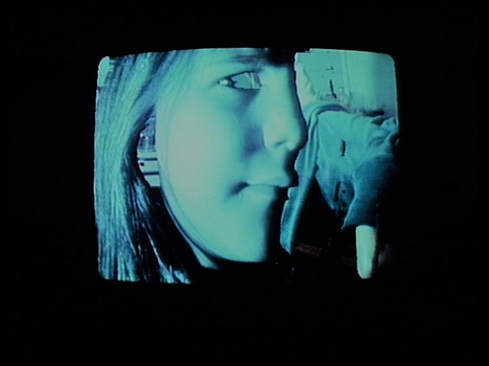
None of this means that Numero deux is a remake of Breathless in any readily detectable sense, of course, or that it recognizably returns to some earlier form of Godardian cinema. Among its other new departures, it is his first feature-length work to make extensive use of video footage, much of it filmed from video monitors that retain their television "look" with​in the larger motion-picture frame. During much of the film, two monitors with different images are shown at the same time; filmmaker and critic Harun Farocki suggests that Godard picked up this idea from his recent experience in video production, since video editing is normally done with a pair of monitors showing edited and unedited material, respectively.
The film does mark a clear continuation of theories and practices Godard had explored earlier, however, and its logical place within his body of work is confirmed by three of its central qualities. One is a deep concern with modern society's division of everyday life into separate domains of "labor" and "leisure," allegedly a "natural" arrangement but really an unnecessary attack on human fulfillment, perpetuated by its own alienated victims. Another is a continued interest in sexuality as both human behavior and artistic metaphor, dissected here with a psychosocial intensity that makes Weekend look almost well-mannered. The third is an undimmed enthusiasm for discursive interruption, cinematic interference, and creative obstruction of the image flow that seduces us so effortlessly in regular movies.
All three of these interests can be traced back to Godard's early features; yet they acquire extraordinary force and clarity in Numero deux, indicating the undiminished desire of its makers not merely to communicate with but (in proper Brechtian fashion) to stimulate and activate the widespread audience they hoped to attract with this "return to mainstream cinema."
As previous chapters have indicated, perhaps the most straightforward way of reading Godard's career is to see it as a steady trajectory away from conventionally seamless cinema (resisted since the early shorts) and toward an energetic fracturing of the film-watchinge xperience. From the impulsive jump cuts of Breathless to the collagelike rhythms of Weekend and the wholesale rejection of narrative in the Dziga-Vertov Group films, Godard shows growing interest in fragmentation - of movies, of the creative processes that produce movies, and of the places and objects (especially bodies) that appear within movies.
Numero deux is another milestone on this path, as its very first images make clear. The screen is divided into three distinct areas. On the left is a patch of bright red video static. On the right is a rectangular patch containing close-ups of a man and woman, who turn to gaze into the camera. In the center are printed words, some (the column on the left) steadily readable but others (the two on the right) blinking on and off 
MON
​​TON
                         SON   IMAGE  SON
​Translations are easy: mon = my, ton = your, son = his, image = image. However, the word son also means "sound," and we certainly hear sounds as we read these words: chirping birds, distant voices of children, and kitchen or household noises. (Note also that Numero deux is the second film - after Here and Elsewhere the preceding year - from the Sonimage production company, set up by Godard and Mieville as an alternative to the commercial studios.) Instead of inviting us into a story, therefore, the movie starts by establishing the screen (and sound system) as a place not of narrative illusion but of visibility and audibility for their own sakes. This explains the barrage of disconnected images, random sounds, and printed words that assert their punning personalities here (also getting in a plug for the outfit that made the film!)
​The next scene is equally fragmented. We see two side-by-side video images. On the upper left is a city view with a plaza in the foreground, trees in the midground, and buildings in the background. On the lower right are two children, a boy and a girl. "There was a landscape," the boy says, "and a factory was put into it." The shot of the children then starts alternating with a shot of two adults, a man and woman, puttering in a kitchen and talking about injustices faced by workers who lose their jobs or labor in unsafe conditions. The little girl speaks a variation of the little boy's comment: "There was a factory, and a landscape was put around it." Since this is still the very beginning of the movie, one might hear in this sentence a hint of "Once upon a time. ..."
Preceding these images, we saw the film's title in provisional form: NUMERO 2 / TEST TITLES. Now it returns more formally, with NUMERO DEUX fully spelled out; but no sooner does it materialize than it starts to change, one letter at a time, until the screen spells out AU DEPART, meaning "departure." (The metamorphosis happens in stages, so evocative fragments like ERO and DEO make fleeting appearances along the way. This happens with intertitles throughout the film, and although the transformations are generally simple letter-by-letter replacements from left to right, some produce more puns and double entendres than space allows me to trace here.) 
The movie then begins all over again, this time with Godard himself appearing as a sort of host or master of ceremonies. He stands at the right of the screen, resting his hands on a TV monitor that displays his face, which is otherwise hard to see because of the camera's angled position. He faces various pieces of audiovisual equipment, including a couple of movie projectors. Talking in the manner of an introductory speaker leading up to a main topic, he remarks on subjects that have long been important to him: language, politics, control. Given its in-person delivery and its position at the beginning of a major work in a transitional phase of Godard's career, his monologue is worth sustained attention.
"When the delegate makes a speech," he begins, "he reads the words of others. I think it's the paper that gives orders, and that's the trouble." Assuming that Godard functions as a sort of "delegate" in this movie appearance, he is evidently criticizing the scripts that supply conventional films with their prefabricated, predigested content. Like a jazz musician (or Beat poet) warming up some favorite riffs, he then launches into a few vague anecdotes based on puns or slippery definitions. In one he uses the word "machine" in both its standard meaning and its specifically French meaning (machin) of "what's-his-name." In another he calls his roomful of audiovisual equipment a "library" with no books. In a third he speaks of "paper" in the different contexts of books, printing, and money. 
​He then introduces a subject that will be central to the movie as a whole: the factory as a metaphor with a wide range of applications, from the intensely personal to the sweepingly social. "In biology, you know, this is a factory here," he says, still speaking in his free-associative manner. "You could call it a factory. The body's a factory, too. I listen to the machines. That machine's going faster. That machine's going slower. And I'm the boss, but I'm a special boss because I'm a worker as well. And because I'm not alone as a worker, we've taken power." 
Godard is probably being ironic here, since his "power" is only that of an independent film artist operating far from the financialr esources of commercial cinema. Nevertheless, this speech appears to come from his heart, and its personal nature is underscored by a reference to his stillrecent road accident: "I was sick for a long time, and that made me think, about the factory." Also sincere - wistful, even - are subsequent remarks about his "factory" being different from others with names like Fox, Metro, Mosfil'm, and Algerian National Cinematography, all connected to "a multinational company that does the programs." He then complains that people are programmed, too. "You can't ever use what you learn in school," he gripes. "If I did literature, I'd tell you that the government programs people with methods that are full of holes. Stepping stones: workers, the children of workers. They go to school, and after school to the factory. It's all the same."
​Good point. Still, in a monologue that slips so mercurially from multinational film factories to shortcomings of the French school system, we may be wondering by now whether Godard is wholly in earnest or if he has shifted into his stand-aside-and-ironize mode.
Staying a quick step ahead of us, he anticipates our question - "Games with words, you say?" - and affirms the importance of hard-to-pin-down language that ambushes our ingrained habits. "In democracies there's something that doesn't surprise me: Word games are banished in a certain sense.... We say they're not serious. But puns - a word that slides on a thing - it's a language, and after all, love taught us language." Wordplay should liberate instead of enslaving, he continues, expanding on a perennial theme. "It slides. That shows short-circuits, interference, and so on. We use it to cure sickness sometimes. So it's serious. We say it's complicated ... but it's things that are complicated. Pain is simple." 
The monologue ends with a lengthy anecdote about a friend named Georges (probably Georges de Beauregard, his erstwhile producer) who came to visit, saw Godard's machines, and said the filmmaker should put them to use. Godard replied that he needed money, and the two repaired for a drink at a nearby bus station, where Godard agreed with the proprietor that provincial Grenoble is "smaller, sweeter, softer" than Paris, his former home. Georges then boarded a Paris-bound plane, promising to raise 600,000 francs for a movie. Godard concludes his story, "A newspaper would have said, 'It was a chilly November morn. The tires squeaked on the runway....' But no literature. Money, commerce, beauty." 
​That last phrase is Godard's three-word definition of modern filmmaking.
excerpt from the book: The Films of Jean-Luc Godard: Seeing the Invisible by David Sterritt
0 Comments


Leave a Reply.

    "A Love of UIQ": Félix Gutattari's Unfilmed Script
    Alejandro Jodorowsky - Dune 'The Movie You Will Never See'
    Barrage (2017)
    Before the Rain (1994)
    Blade Runner - A Camera on Violence: Reality and Fiction
    BLADE RUNNER 2049 AND ARRIVAL: a pedagogical cinema
    Brakes (2017) - Talks with Mercedes Gower
    COLUMBUS’ REVIEW: THE BEAUTY OF THIS MOTION PICTURE IS THE PICTUREn Text
    Darren Aronofsky - Mother! (2017)
    David Lynch - Night Town (Part 1)
    David Lynch - Night Town (Part 2)
    David Lynch - NIGHT TOWN (Part 3)
    David Lynch- NIGHT TOWN (Part 4)
    David Lynch -Head Like A House On Fire (Part 1)
    David Lynch - Head Like A House On Fire ( Part 2)
    David Lynch - Head Like a House on Fire (Part 3)
    David Lynch - Our SchoolGirl Of The Sorrows (Part 1)
    David Lynch - Our Schoolgirl Of The sorrows (Part 2)
    David Lynch - OUR SCHOOLGIRL OF THE SORROWS (Part 3)
    David Lynch - OUR SCHOOLGIRL OF THE SORROWS (Part 4)
    Dziga Vertov - The Man with the Movie Camera (1929)
    'Dune' (1984)
    Gabriel Range - Death of a President
    Germaine Dulac & Antonin Artaud - The Seashell and the Clergyman
    Inland Empire (2006)
    Ingmar Bergman - Hour of the Wolf/Vargtimmen (1968)
    Jean-Luc Godard - Alphaville (1965) (full movie)
    Jean Luc - Godard - Weekend
    Jean - Luc Godard - My Life to Live
    Jean-Luc Godard - Numero Deux ( Part 2)
    Jean -Luc - Godard - Numero Deux (Part 1)
    Jean-Luc Godard - Numero deux (Part 3)
    Jean-Luc Godard - Numero Deux (Part 4)
    Jean-Luc Godard - Breathless
    Mark Fisher - Existenzialism and Inhumanism
    Mark Fisher - eXistenZ and noncognitive labour
    McKenzie Wark - Edge of Tomorrow: Cinema of the Anthropocene
    MOTHERS (2010) by Milcho Manchevski
    DOMINICK SUZANNE-MAYER - No Country for Old Men and the Unavoidable Cycle of Greed and Violence
    No Country For Old Man - Cinephilosophy dialogue with Gabriele Guerra
    On the Milky Road (2016)
    PI (1998)
    Pier Paolo Pasolini - Salò (120 Days of Sodom)
    REWEIRDING ARCADIA
    Saltwater(2014)
    Silence (2016)
    Song To Song (2017)
    TERENCE BLAKE - ANAMNESIS AND ESTRANGEMENT (2): Jodorowsky’s DUNE
    The Death of a President interview with Gabriel Range
    The Dead Man 2 : Return Of The Dead Man (1994)
    The Dinner (2017)
    The Hours (2002)
    THE SPACE IN BETWEEN(2016)
    T2 Trainspotting (2017)
    The Daughter (2015)
    The Handmaiden ( Ah-Ga-SSI), (2016)
    The Other Side of Hope (2017)
    The Salesman (2016)
    The Young Karl Marx (2017)

    Archives

    December 2018
    January 2018
    December 2017
    November 2017
    October 2017
    July 2017
    June 2017
    May 2017
    April 2017
    March 2017
    February 2017

    RSS Feed

Powered by Create your own unique website with customizable templates.
  • OnScenes
  • News
  • Art
    • Music >
      • Album Review
    • Poetry
    • Film >
      • Filmmakers >
        • Movies
    • Theater >
      • TheaterMakers
  • Philosophy
  • PhiloFiction
  • Science&Technology
  • Economy
  • Media
    • Video
    • Audio
  • About
  • Contact
    • Location