OnScenes
  • OnScenes
  • News
  • Art
    • Music >
      • Album Review
    • Poetry
    • Film >
      • Filmmakers >
        • Movies
    • Theater >
      • TheaterMakers
  • Philosophy
  • PhiloFiction
  • Science&Technology
  • Economy
  • Media
    • Video
    • Audio
  • About
  • Contact
    • Location

Numero deux (Part 3)

7/21/2017

0 Comments

 
Picture
​If this "charging and discharging" refers to the body's built-in biological functions, then this "hurt" may simply be the existential pain of what Freud called the "ordinary unhappiness" of life. One suspects Sandrine is less worried about this "natural" human discomfort, however, than about humanly caused sufferings brought by social, economic, and political abuses specific to the industrial and postindustrial eras - sufferings not limited to the "factory" or "power plant" aspects of capitalism, as conventional reformers would often have us believe, but wreaking more havoc as they spill into the domestic sphere with which Numero deux is largely concerned.
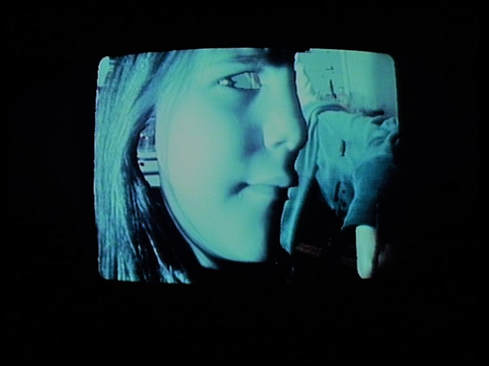
​The porn movie is back on the upper-left monitor and brassy jazz has joined the sound-track cacophony as Sandrine continues, "We play music. But why play music? To see the unbelievable." The monitor with the little girl now fills much of the screen, displacing commercially jaded sex with a reminder of how promising childhood is before dehumanizing forces have a chance to sour it.
​"What is the unbelievable?" Sandrine concludes. "The unbelievable is what we don't see." This is of course a resonant phrase for Godard and Mieville, who are dedicated to exposing the limitations of the visible and locating the invisible dimensions where power and influence often reside. Here as before, their goal is to refute two propositions: that seeing = believing (which allows film to deceive us) and that believing = seeing (which allows us to deceive ourselves). Numero deux wants to explore the unbelievable by probing the limits of "what we don't see," as Sandrine puts it. This focuses the film on two sorts of material: that which is socially forbidden - a child should not witness the sexuality of its parents, for instance - and that which is psychologically inaccessible, such as the repressed desires that surge through our subconscious minds. (Later films ​by Godard and Mieville will approach the "unbelievable" from another angle, using cinema to locate a spiritual dimension within the material realm.)
The child works away at her blackboard, meanwhile, writing a very unchildish slogan: "Before being born, I was dead." As noted, many elements of Numero deux evoke childhood: the girl and boy who speak at the beginning, the nursery-rhyme cadence of "once ..." and "twice upon a time," the composite image of adult sexuality and a young girl's face. The child's blackboard phrase now implies concern with a still earlier stage, speculating on the nonexistence that precedes birth. What both separates and joins the obscurity before birth and the self-awareness of life is, of course, the pivotal moment of conception. Numero deux follows Freud in recognizing the disavowed but unbreakable links among eros, the sexual drive; thanatos, the desire to reclaim the equanimity of nonexistence; and the lifelong urge - beginning in infancy - to understand and resolve the tensions generated by these powerful forces.
More than one contemporary thinker has investigated the territory that Godard and Mieville delve into here, and a glance at some of their ideas will illuminate Numero deux and its place in an important cultural tradition. I recognize that the movie is dense and strange enough in itself, without bringing in a host of cultural references to complicate it further; but Godard and Mieville are ardently intellectual artists, and to trek through a work like this without at least touching on its philosophical "backstory" would be antithetical to their spirit. Since one of the movie's most striking (and controversial) qualities is its fascination with the interplay between sociopolitical norms and the body's indecorous demands, I focus on modern theorists who give intellectual weight to aspects of human experience that have traditionally been considered too "low" or "base" for consideration by serious-minded persons. 
​One we have already encountered is Mikhail Bakhtin, who celebrates the carnivalism of freethinking works that challenge the social, cultural, and political norms of their day. Such writings frequently dwell on urges of the body (especially the lower body, where sexuality and excretion blur the boundaries between self and other) at the expense of rules, regulations, and laws designed to squeeze the unbridled individual into governable patterns. Another is Georges Bataille, whose concept of the informe argues that materiality is irreducible and "unformable," and that theory must resist the impulse to shape it with abstract schemes and systems. Still another is Julia Kristeva, who states that infants pass through an abject stage ​of development, during which they cannot conceive of being either part of on separate from the mother. At this time they inhabit a borderline mental realm that oscillates among the exhilirating prospect of independence, the smothering fear of being entrapped or reabsorbed, and the dread of unmoored existence in an outside world of solitude and instability. 
Numero deux refers directly to none of these authors, but its concerns are rooted in the tradition they represent. Like the outwardly chaotic Weekend, with its casual cannibalism and cartoonish violence, it exudes a subversive spirit through polymorphous sexuality and a seemingly disjointed structure; both movies also have quick-as-lightning mood changes that reflect the proud instability of carnival grotesquerie. The superimposed video images in Numero deux are especially effective in this regard. Although their implications can be unsettling, as in the primal-scene material, their fluid form and provocative content create a transformative atmosphere in which ingrained rules may be bent, broken, or reshaped beyond recognition in the blink of an eye.
Two facets of Numero deux would have earned Bataille's particular applause. One is its rejection of linear narrative in favor of a thematic density that foregrounds the physicality of word and image. The other is its focus on "unformed" materials, defining this territory broadly enough to encompass phenomena as different as the still-developing mind of the young child and the presence of excrement as an intimate ingredient in daily life. Moreover, the filmt reats such "low" material without necessarily twisting it into shapes held acceptable by social convention. Bataille calls for a new brand of theory that he names "heterology" - actually the opposite of a theory since it "is opposed to any homogeneous representation of the world, in other words, to any philosophical system." Such systems, he says, always aim at deflecting our "sources of excitation" and developing a "servile human species, fit only for the fabrication, rational consumption, and conservation of products." What needs to be reclaimed are the substances rejected by these processes, "the abortion and the shame of human thought," so that philosophy can become a servant of "excretion" and introduce "the demand for the violent gratifications implied by social life." Those gratifications took center stage in Weekend, which asked how cultures and classes might "consume" and "excrete" one another in acts of war and revolution. The same gratifications assert themselves in Numero deux, here taking more homely forms (power games linked with bodily functions) but still charged with potentially disruptive power operating within and around the individual human being. 
Kristeva's notion of the abject is perhaps clearest of all in a movie preoccupied with intersections of "low" and "high" material, and with a wide variety of borderline conditions: political/pornographic, natural/ artificial, public/private, sound/image, attraction/repulsion, and so on Among the most important of these is film/video, since even the production methods of Numero deux are designed to blur conventional boundaries. For the infant, Kristeva suggests, the abject stage is marked by profound ambiguity as to where the parent leaves off and self-identity begins. Manifesting this condition in cinematic terms, Numero deux embodies the ambivalence of a young medium (video) caught within its parent medium (film) at precisely the moment when its newly acquired powers, purposes, and sensibilities are ready to assert themselves but are still uncertain as to what their own distinctiveness and usefulness will be. One of the qualities that make Numero deux unsettling is the fact that it doesn't just allegorize but vividly actualizes - one might even say incarnates - the abject. 
Numero deux is also concerned with the difficulty of crossing sociocultural barriers, be they physical or psychological. Rarely has a film concentrated on the concept of blockage in so many forms. This starts at the beginning, when the title has trouble appearing on the screen, as if the movie were facing some invisible block or obstacle on its way to the audience. The film does get started eventually, but various devices keep the sense of blockage going. Some operate through the film'ss tyle: the uneven progress of the story; the frequent interruption of one scene by another; the competition between filma nd video images, which sometimes seem to get in each other's way. Others operate through the movie's content: the stopand-start pictures on the monitors in Godard's workshop; the image of a primal scene that must be repressed as soon as it is witnessed; the linkage of birth (commencement) and death (cessation) in the girl's blackboard sentence. When the narrative proceeds a little farther, we will encounter the film's most blunt metaphors for blockage: the constipation and impotence that plague Sandrine and her husband, respectively. When she compares her mother with a "factory" that "hurts" when it "charges and discharges," Sandrine is also describing herself and many others - women who feel cut off from life's flow by the demands of work, and deprived of healthy sexuality by the insensitivity of their husbands. We will also learn that Sandrine's spouse is abusive, using anal intercourse (blocking a channel) to punish and control her. 
One more aspect of Numero deux that Kristeva's ideas illuminate is its Godardian use of sound (immediate, surrounding, ungraspable) to combat the tyranny of the image (distant, hard-edged, authoritarian) that dominates commercial cinema. Kristeva holds that early infancy is bathed in sound as the child develops within the "chora," which is both the fleshly envelope of the womb and the sonic envelope of the noises (most notably, the mother's voice) that filter through to the infant's hearing. Nostalgia for this stage of life persists long after its peace and plenitude are ruptured by the rude awakening called birth. This helps explain the power of music (increasingly important in Godard's cinema) to touch us in ways for which rational considerations can't wholly account. It also helps explain the cacophonous sounds in Numero deux, a film that extravagantly favors physical immediacy over coded communication. Numero deux loves noise - noise for the ears, such as the gobbledygook of overlapping sound tracks, and noise for the eyes, such as video static and on-and-off television pictures. Godard told us earlier that language games can cure sickness, so it isn't surprising that verbal and visual puns are a major component of this movie (which was produced after he himself had recuperated from his serious motorcycle accident). The way to heal blockage is with slippage - and nothing slides more easily, or with a more liberating effect, than a word or image whose meaning has no fixed abode other than in-the-moment dialogue with its audience.
Even as it pursues its fascination with the materiality of sight, sound, and cinema, Numero deux has ideological goals in mind, with specific analyses to conduct and sociopolitical messages to convey. Accordingly, some of its mostly brief episodes reduce the frequently high level of verbal and visual "noise," presenting lucid images with synchronized sound - in other words, coherent "scenes" appearing one at a time. Though these often range from difficult to obfuscatory, if measured in ordinary movie terms, they gather significance and force as the movie progresses. 
As we would expect, many episodes continue the film's concern with culturally "low" subjects, focusing on women, children, housework, and biological details that transform the "abject" from an abstract category into an everyday affair. Inflecting their meaning are Godard's familiar intertitles, drawing our thoughts from the manifest content of the scenes to the ideas behind them, generally in punning, allusive ways. As the girl writes her "before I was born" statement on the blackboard, for instance, the intertitle REPRODUCTION appears and then changes to REGULATING, suggesting a long list of possible meanings and interconnections. 
Soon afterward, Sandrine irons clothing in her kitchen while the little girl, Vanessa, paces restlessly about. Perhaps prompted by the seminudity of her mother, naked beneath an open bathrobe, Vanessa asks whether she herself will have "blood between [her] legs" when she is older. "Yes," replies Sandrine, adding, "You'll have to watch out for guys. They're not reliable." (Intertitle: REGULATING becomes EDITING.) 
The composite image of sexual intercourse and the face of a girl (Vanessa) returns, and now the child makes an apparent reference to it: "Sometimes I think what Mama and Papa do is pretty, and sometimes I think it's caca." (Intertitle: MONTAGE becomes FACTORY.) Then we see Vanessa's lower body as Sandrine washes her in a bathtub. "Do all little girls have a hole?" the child asks, and a bit later, "Is that where memory comes out?" Answered with a cheerful "yes," the child asks where memory goes after it "comes out," and Sandrine replies, "It vanishes. It vanishes into the landscape. There's a factory in the landscape now." 
​The film's chain of associations is becoming more complex: Factory and landscape are still tightly connected, but the latest intertitle uses FACTORY as a link between MONTAGE and the body, which produces memories (residues of images previously consumed?) that disappear into the landscape, where (completing the cycle) they join another factory! It would be a challenging task, and perhaps an endless one, to count up all possible meanings of this visual-verbal rebus; but its most important point may be the comparison of the (female) body to a factory, at once physical (complete with "holes" that produce both excrement and new life) and psychological (there is a memory "hole" too).
​We have seen the foregoing shots on a video screen that almost fillst he larger surface of the movie screen. Doubling this arrangement, two video screens now appear. A little boy (Nicholas) sits at a school desk, doing calculations and reading from a book about a "stupid wolf" who is ignorant, hungry, and lost. Then we see him at home, sitting moodily apart as his mother and little sister (Sandrine and Vanessa) dance nearly naked to a song with political lyrics. Sandrine likes the song's message that "anarchy is not a bomb, it's justice and liberty." 
​Intertitle: SOLITUDE becomes NUMBER ONE. A pop singer yowls about loneliness on the sound track, and we cut to Nicholas and Vanessa conversing about pop culture. More accurately, they are trading narratives obviously borrowed from pulp fiction or B movies - as they gaze at each other across a table. Nicholas begins, "She's the one who betrayed him, eight years ago.... She decided to kill everyone in her way." Vanessa continues, "By way of welcome she plowed five bullets into his belly. He'd committed two murders, but he loved her. What an odd time!" The scene is photographed to favor Nicholas, with the camera facing him over Vanessa's shoulder; yet her image often scrolls videographically over his, and her face dominates the whole screen for a moment near the end.
​Once again, two important points emerge from a moment with little story or character development. For one, this represents a new approach to improvisation in cinema, made possible by video technology that allows artist(s) to manipulate or "play" the contents of the screen as spontaneously as if it were a musical instrument or the canvas of an "action painting." Godard's longtime interest in improvisation (dating back to Breathless) thus finds a new outlet and a host of fresh possibilities.
As for this particular improvisation, it is as if the two makers of Numero deux were making their own voices heard through the on-screen children, with the lesser-known Mieville wrestling the world-famous Godard for her fair share of attention. Reinforcing this interpretation (and the notion that Numero deux deals largely with gender politics) is the intertitle reading NUMBER TWO that appears just as the girl starts to speak. For years now, the names of Godard's films have cropped up at odd moments during the action; but this particular instance does not seem merely random and interruptive, especially since NUMBER ONE materialized just before Nicholas began his turn in the spotlight. These intertitles remind us that society indoctrinates even the youngest males and females into their "natural" places: Number i and Number 2, respectively. Fortunately, this movie is named after the "lesser" person, and an invisible hand at the video panel makes sure her image gets fair representation, despite the primary camera's all-too-typical position privileging her male companion. This is improvisation with an agenda. 
The adult world returns on side-by-side video screens. On the left, the grandfather of the household tries to amuse a clearly bored Nicholas by burning a piece of cigarette paper and exulting over how completely the paper is consumed - a Godardian joke, perhaps, suggesting the minimal value placed on (old-fashioned) paper in the age of (fashionable) cinevideo. On the right, Sandrine and her husband (Pierre) quarrel violently as he tries to remove the stereo earphones that allow her a temporary escape from domestic life. 
Two new screens then appear. On the right, Sandrine lies sleeping while factory-and-landscape imagery scrolls and unscrolls over her image, as if revealing her dreams. On the left, Pierre soliloquizes about city discomforts and the inadequacies of education; then he explains his job (as a recording technician) to Sandrine. He keeps talking after she leaves the room. "I've had kids," he says. "I never screw them. It's not allowed. I agree with that. I screw my wife, but it's no good. Thanks, boss." This remarkable speech points in three directions at once: toward the id impulses raging within him, toward the social norms restraining his behav​iors, and toward the domestic unhappiness brewed by these unresolved tensions.
Intertitle: LANDSCAPE becomes NIGHT. Compressing to a single screen, the film returns to physical blockage as a metaphor for the repression of abject urges. "Shit! It's blocked up again! Awful plumbing in these projects," Pierre complains, moving from the toilet to the bathroom sink, where he urinates after getting Sandrine's permission. Talk then turns to sex:
SANDRINE: Do you want to tonight?
PIERRE: I don't know. We'll see.
​SANDRINE: Thanks, boss.
​She grasps his penis and massages it, complaining that he or "his job" always determine whether they'll have sex. He agrees with her anger, adding that getting an erection is often impossible for him nowadays. She sympathizes with him, but he makes a wisecrack about her periods and stalks out. "It all has to change," Sandrine wistfully laments. "But where does this [change] happen?" 
​The quarrel continues in the next scene. As a static-filled video monitor pulses on one side of the screen, Pierre does a household chore on the other, arguing with Sandrine about his reluctance to spend time with her. "There's always other [available] guys," she says - apparently a casual threat, but actually a turning point in the film'sm inimal story. An abrupt cut brings back the jolting primal-scene image, and Pierre finally reveals what this image means in narrative terms, integrating it into the movie's plot structure for the first time. "Something awful happened," he tells us. "Sandrine screwed another guy. She wouldn't say who. I wanted to rape her. She let me, and then I screwed her in the ass. She screamed. Afterward, we realized Vanessa was watching. Family life - maybe that's what it is." 
​This is strong stuff, and the filmmakers take immediate steps to defuse any melodramatic effect it may have, following it with a sort of grim comic relief: Pierre tries to help Sandrine figureo ut the controls of a new washing machine, and Sandrine's bent-over position echoes her posture when Pierre violated her. She wins this round by managing to start the washer - a victory for woman as "domestic engineer" in her household factory and fixes Pierre with a told-you-so look. 
The next scene returns Pierre to dominance, however, as the couple has intercourse in what we learn is his favorite position, with Sandrine straddling him and facing toward his feet. She ostensibly has some control in ​her on-top location; but the camera views the scene from his perspective, and he tells Sandrine that he likes this position because it allows him to see parts of her that she cannot see herself. He then describes the view, offering (his) words as a replacement for (her) images. His description turns out to be surprisingly poetic, likening Sandrine's body to a river and its banks; yet the scene's visuals are deliberately awkward, as we stare past Pierre's nose to Sandrine's buttocks. His dominance of the situation is suspicious at best and unacceptable at worst, given our knowledge of his capacity for sexual violence. 
​Accordingly, the film counters this scene with another bedroom episode that privileges Sandrine, who faces the camera across Pierre's body as she masturbates him (without much effect) and delivers a monologue far more practical, poignant, and meaningful than his:
Every morning you leave. You get out of here. I'm not criticizing, but / don't have a job. I see your ass leaving, going off to work. That's a part of you that you never see. At night. . . and when you come home, I see your prick. ... I think love would have to be a job for you. ... If we were rich, I think I'd pay for it.
​They aren't rich, Pierre quickly points out. The next scene finds Sandrine looking for a job of her own, while turning away a politically active neighbor who wants to interest her in the oppression of Chilean women. Problems in Chile are too distant for a woman preoccupied with difficulties close to home; but then again, oppression is a phenomenon Sandrine knows something about. As the right-hand video monitor reminds us of Pierre's sexual problems - his penis remains flaccid as she repeatedly takes its tip into her mouth - on the left-hand screen we watch her read a pamphlet describing female Chilean prisoners who are blindfolded, manipulated, and subjected to the desires of male guards. 
​"They are other women," she concludes. Then she adds, "Me, too." Could this be the beginning of a radicalized consciousness, or at least a politicized one?
​We will not find out right away, since Sandrine must still give most of her attention to household chores, which she does not associate with political thinking. Raising her children is one of these, and a new challenge may be looming here, since Vanessa appears to be brooding over sexual subjects. While this is normal for a growing girl, it is surely more complicated than usual in this case, given the violent sex scene that Vanessa recently witnessed.
Sandrine greets Pierre cheerfully, then scrubs at Vanessa's shoes while the girl questions her about intimate matters: "Does Papa touch your ​breasts when you sleep together? Is it he who likes it, or is it you?" Sandrine answers directly: "Both of us do. But it's not the same. Sometimes it hurts. I like it anyway." Vanessa asks if she can watch them sleep together, and Sandrine replies with a noncommittal "we'll see," as if they were discussing a favorite dessert or some other casual treat.
This family is uncommonly candid about sexuality, and Godard and Mieville see this as a mixed blessing. It has liberating aspects, such as the parents' willingness to discuss sex with the kids; and it has oppressive sides, such as the sexual threats and abuses thrown heedlessly about the house. In any case, the family's day-to-day dynamics are steeped in the bland regularity of middle-class routine, suggesting that the filmmakers see sexual openness in itself as a weak defense against the bitter forms of alienation brought by blockages and brutalities of contemporary life.
excerpt from the book:The Films of Jean-Luc Godard: Seeing the Invisible by David Sterritt
0 Comments


Leave a Reply.

    "A Love of UIQ": Félix Gutattari's Unfilmed Script
    Alejandro Jodorowsky - Dune 'The Movie You Will Never See'
    Barrage (2017)
    Before the Rain (1994)
    Blade Runner - A Camera on Violence: Reality and Fiction
    BLADE RUNNER 2049 AND ARRIVAL: a pedagogical cinema
    Brakes (2017) - Talks with Mercedes Gower
    COLUMBUS’ REVIEW: THE BEAUTY OF THIS MOTION PICTURE IS THE PICTUREn Text
    Darren Aronofsky - Mother! (2017)
    David Lynch - Night Town (Part 1)
    David Lynch - Night Town (Part 2)
    David Lynch - NIGHT TOWN (Part 3)
    David Lynch- NIGHT TOWN (Part 4)
    David Lynch -Head Like A House On Fire (Part 1)
    David Lynch - Head Like A House On Fire ( Part 2)
    David Lynch - Head Like a House on Fire (Part 3)
    David Lynch - Our SchoolGirl Of The Sorrows (Part 1)
    David Lynch - Our Schoolgirl Of The sorrows (Part 2)
    David Lynch - OUR SCHOOLGIRL OF THE SORROWS (Part 3)
    David Lynch - OUR SCHOOLGIRL OF THE SORROWS (Part 4)
    Dziga Vertov - The Man with the Movie Camera (1929)
    'Dune' (1984)
    Gabriel Range - Death of a President
    Germaine Dulac & Antonin Artaud - The Seashell and the Clergyman
    Inland Empire (2006)
    Ingmar Bergman - Hour of the Wolf/Vargtimmen (1968)
    Jean-Luc Godard - Alphaville (1965) (full movie)
    Jean Luc - Godard - Weekend
    Jean - Luc Godard - My Life to Live
    Jean-Luc Godard - Numero Deux ( Part 2)
    Jean -Luc - Godard - Numero Deux (Part 1)
    Jean-Luc Godard - Numero deux (Part 3)
    Jean-Luc Godard - Numero Deux (Part 4)
    Jean-Luc Godard - Breathless
    Mark Fisher - Existenzialism and Inhumanism
    Mark Fisher - eXistenZ and noncognitive labour
    McKenzie Wark - Edge of Tomorrow: Cinema of the Anthropocene
    MOTHERS (2010) by Milcho Manchevski
    DOMINICK SUZANNE-MAYER - No Country for Old Men and the Unavoidable Cycle of Greed and Violence
    No Country For Old Man - Cinephilosophy dialogue with Gabriele Guerra
    On the Milky Road (2016)
    PI (1998)
    Pier Paolo Pasolini - Salò (120 Days of Sodom)
    REWEIRDING ARCADIA
    Saltwater(2014)
    Silence (2016)
    Song To Song (2017)
    TERENCE BLAKE - ANAMNESIS AND ESTRANGEMENT (2): Jodorowsky’s DUNE
    The Death of a President interview with Gabriel Range
    The Dead Man 2 : Return Of The Dead Man (1994)
    The Dinner (2017)
    The Hours (2002)
    THE SPACE IN BETWEEN(2016)
    T2 Trainspotting (2017)
    The Daughter (2015)
    The Handmaiden ( Ah-Ga-SSI), (2016)
    The Other Side of Hope (2017)
    The Salesman (2016)
    The Young Karl Marx (2017)

    Archives

    December 2018
    January 2018
    December 2017
    November 2017
    October 2017
    July 2017
    June 2017
    May 2017
    April 2017
    March 2017
    February 2017

    RSS Feed

Powered by Create your own unique website with customizable templates.
  • OnScenes
  • News
  • Art
    • Music >
      • Album Review
    • Poetry
    • Film >
      • Filmmakers >
        • Movies
    • Theater >
      • TheaterMakers
  • Philosophy
  • PhiloFiction
  • Science&Technology
  • Economy
  • Media
    • Video
    • Audio
  • About
  • Contact
    • Location