OnScenes
  • OnScenes
  • News
  • Art
    • Music >
      • Album Review
    • Poetry
    • Film >
      • Filmmakers >
        • Movies
    • Theater >
      • TheaterMakers
  • Philosophy
  • PhiloFiction
  • Science&Technology
  • Economy
  • Media
    • Video
    • Audio
  • About
  • Contact
    • Location

Before the Rain(1994)- 'Ceaseless Story'

1/24/2017

0 Comments

 
Picture
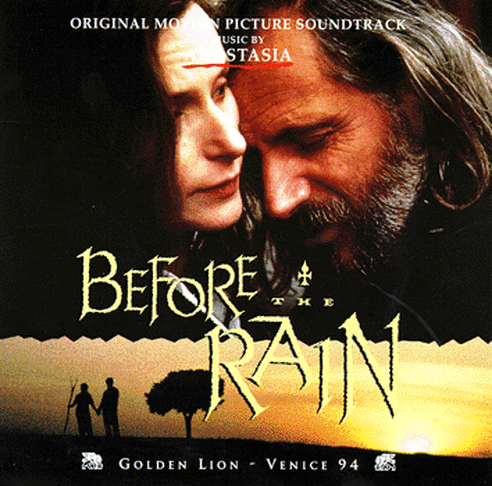
Before the Rain brought a dream of "Balkan struggle" to the world that drummed up a buzz in the mid-1990s, winning the Golden Lion in Venice and an Academy Award selection. Five years of progressively horrendous news from the previous Yugoslavia, with wild battling and slaughters in Croatia and Bosnia, made Milcho Manchevski's singing yet expressive film convenient to a degree that couple of producers have ever accomplished. In any case, this is a long way from a narrative treatment of Balkan savagery, and the nation that Manchevski put on the guide—his local Macedonia—was in reality the main Balkan state around then not to have been overwhelmed by war or ethnic clash. 

Manchevski had not embarked to clarify the staggering arrangement of occasions that began in 1991, as government Yugoslavia broke down amid the year that saw the Soviet Union itself go into disrepair. Having experienced childhood in Skopje, he completed his film instruction in the United States, where he started to make a notoriety in music recordings amid the eighties. What's more, the capturing pictures and prodding emotional structure of Before the Rain draw something from this experience. Be that as it may, if Manchevski has a place with the era of movie producers who have grown up with the popular verse of music recordings as a major aspect of their normal vocabulary, his other motivation is without a doubt the western—an impression affirmed by his similarly aggressive second element, Dust (2001).
​Think about the westerns of Sam Peckinpah, elegiac tributes to a lifestyle being smashed by innovation. Then again of Sergio Leone, whose movies were once scornfully known as "spaghetti westerns" however were really ornate minor departure from the colossal American western custom, and impacted postsixties producers all over. Peckinpah and Leone managed in myth instead of history, and weren't hesitant to utilize extraordinary viciousness for both aesthetic and sensible impact. The savagery that tears through Before the Rain, on Macedonian slopes and in a London eatery, draws on such coaches for its effect. What's more, when Manchevski demands that his film is not "about" Macedonia, or even only the Balkans, he's definitely trying to that same all inclusiveness recently, extraordinary westerns, for example, Once Upon a Time in the West or The Wild Bunch. The assume that his legend, Aleksandar, cuts is now a sentimental one in London however turns out to be unquestionably a westerner back in Macedonia, as he comes back to his old town, just to be quickly gone up against by a weapon toting youth. 

The specifics in the film are precisely adjusted, not to incite a critical reaction ("more Balkan anarchy") yet to clarify this is a perpetual, repetitive process, as Muslim censures Christian thus incites striking back by Christian. The two outfitted packs we meet in the film's initial segment, both with their trigger-glad shooters, are in fact counterparts, however one cases to retaliate for Christian Macedonian respect and the other Muslim Albanian qualities. However, we ought to be evident that nor is intended to be normal of present day Macedonians, of the kind we see quickly when Aleksandar lands in Skopje, any more than they're average of the optimists and pioneers wherever that we call fear mongers today.
Terrorism was certainly on Europe’s agenda when Manchevski first composed his layout for the film in 1991, in the wake of paying an arrival visit to Macedonia. In any case, bombs, deaths, and kidnappings were then more basic in Britain, Italy, and Germany, as we're reminded by the radio news Anne listens to in her photograph organization office amid the London scene. Irish republican bomb alarms were practically standard in England from the seventies to the finish of the nineties, which loans credibility and power to her separating with Aleksandar in a London burial ground. He's abandoning her in a London under fear based oppressor risk to do a reversal to "quiet" Macedonia. What is so striking about Manchevski's round frame, similar to a Borges story or an Alain Resnais film, is that Anne is viably seeing pictures from the future on her London light box. This is a world connected by savagery: quite a bit of it interceded by photography and news yet every last bit of it conceivably nearby and ridiculous, as both heroes will find so mercilessly. 

It was undoubtedly the feeling that Manchevski could recount a genuinely European story, instead of simply a Balkan one, that connected with his supporters. Simon Perry, the maker of more than twelve exceptional European movies while heading the state financial specialist British Screen, turned into a moving power behind the film; and Britain's European Co-creation Fund additionally contributed, as frenched makers and the Ministry of Culture of the still youthful Republic of Macedonia. For two decades, European governments and cross-outskirt bodies have been grappling with the issue of connecting their individual film ventures to end up distinctly more compelling and to recount stories that demonstrate the truth of a landmass where London and Skopje are just a couple of hours separated, with individuals continually going between them. Prior to the Rain drove the path for different midnineties movies that figured out how to do this, for example, Ken Loach's Land and Freedom (1995) and Lars von Trier's Breaking the Waves (1996). Every one of the three of these were extensive film industry and also celebration and basic triumphs in various nations. And by and large intense, sincerely complex stories implanted in their scenes and characters' histories. However all were shot on shoestring spending plans quietly amassed from differing sources. What's more, Before the Rain about endured the sort of a minute ago calamity that is a recognizable element of European filmmaking, when one of its unique supporters, Channel Four Television, hauled out, leaving British Screen to spare the creation.
Picture
One figure common to von Trier’s breakthrough film and to Before the Rain is Katrin Cartlidge, who died suddenly at the age of forty-one, in 2002. In the wake of getting her begin in TV cleanser musical drama and satire, Cartlidge developed in the mid nineties as a striking and bold performing artist. She made her presentation in Mike Leigh's Cannes victor Naked (1993), playing a divided out someone who is addicted in this grim parody of cutting edge behavior, then turned into the blurb picture for Manchevski's film, before going ahead to star in two further Leigh act of spontaneities, Career Girls (1997) and Topsy-Turvy (1999). She came back to the Balkans in Danis Tanovic's No Man's Land (2001), set amid the Bosnia-Herzegovina strife, playing a correspondent. Cartlidge was never charming in any routine way, however she conveyed nearness and conviction to every one of her parts in a grievously short vocation. In Before the Rain, she figures out how to connect the inlet between contemporary London and "ageless" Macedonia, between an advanced profession lady juggling employment and connections and a statuesque grieving figure in a classical scene.
Picture
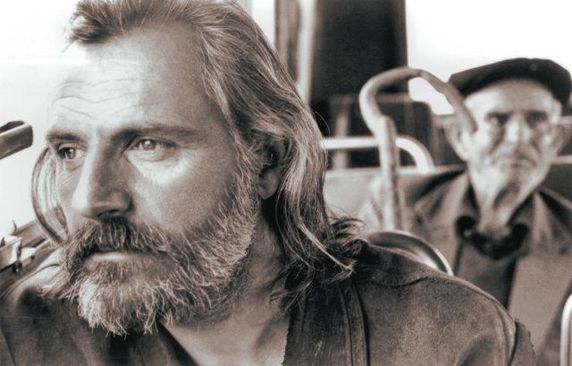
Rade Serbedzija, a recognized Croatian stage on-screen character and star of Yugoslav silver screen and TV, does likewise, in switch. He had lived estranged abroad like the photojournalist he plays, a fascinating figure in the film's focal London grouping, before he comes back to Macedonia and tries to get the strings of his previous lifestyle in a group that is currently dangerously energized. Aleksandar kicks the bucket attempting to safeguard the Muslim young lady we have seen toward the start of the film, when she is ensured by a blameless youthful minister, Aleksandar's nephew, touchingly played by the rising French on-screen character Grégoire Colin. Serbedzija's own life has reverberated his part in the film, as he has worked for peace and compromise in Bosnia, acting with Vanessa Redgrave in Sarajevo, while additionally seeking after a fruitful profession in Hollywood silver screen.
Before the Rain brought ​a specific picture of the Balkans to an expansive gathering of people, and propelled both Macedonia and Manchevski on the world stage—and being the primary film shot (halfway) in Macedonian to be broadly observed universally. However, with over ten years of insight into the past, we may think about whether its prosperity was as much because of its opportuneness as to its inherent qualities. I had the uncommon experience of participating in a universal class dedicated to the film, held in Florence in 1999, at which specialists in numerous parts of its experience and setting talked more than two days. The way that the film could maintain such nitty gritty examination was at that point essential. Be that as it may, what likewise developed was the means by which well Manchevski's craving to make something that was not reportage or history or a political examination had prevailing with regards to leaving the film open to various understandings.
Picture
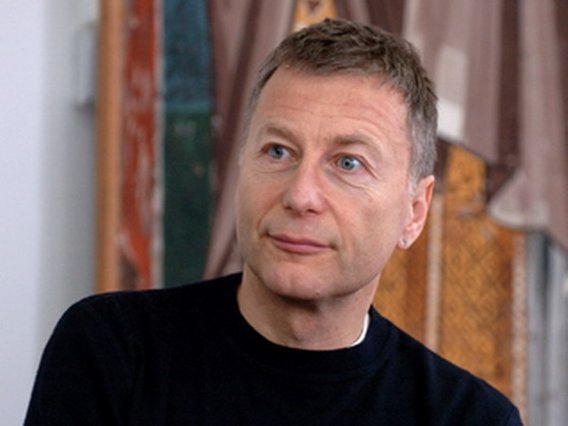
​Milcho Manchevski is a New York-based Macedonian-born film director, writer, photographer and artist. His Academy-award nominated film Before the Rain won the Golden Lion at the Venice Film Festival, FIPRESCI and Independent Spirit, along with 30 other awards. The New York Times included it on its "1,000 Best Films Ever Made" list.

Manchevski has directed four other features - Bikini (2017, in post-production) Mothers (2010), Shadows (2007) and Dust (2001), an episode of HBO's The Wire and 50 short forms (including Thursday, which was part of the Venice Feature Reloaded (2013). He has won awards for his experimental films (1.73), music videos (MTV and Billboard for Tennessee) and commercials (Macedonia Timeless).

His work had more than 250 festival screenings (including Venice, Berlin, Toronto, Sao Paolo, Istanbul, Tokyo, Jerusalem, Hong Kong, Stockholm, etc. His films have been distributed in more than 50 countries.

He has published books of fiction (The Ghost of My Mother), essays (Truth and Fiction: Notes on Exceptional Faith in Art) and photographs (Street and Five Drops of Dream, books that accompany two exhibitions of photographs).

Manchevski has staged performance art by himself and as a (founding) member of the group 1AM.

His work has been included in the curricula of numerous universities and has been the subject of two academic conferences (in Firenza and Leipzig); he holds an Honorary Doctorate from Moscow's VGIK.

Manchevski has taught and guest-lectured extensively: University of Cambridge, Columbia Univesity, VGIK, Filmuniversitat Babelsberg "Konard Wolf", University of Chicago, University of Tokyo,Yale University, The Arts University College at Bourenmouth, Carleton University in Ottawa, Baltic Film and Media School, Elon College, Mahidol University Interanational College - Bangkok , Minsk University, Southern Ilinois University, Union College, University of Bielefeld - Germany, Universidade Federal do Rio Grande do Sul - Brazil, University of Central Florida, University of Washington, FDU - Belgrade, University of Texas in Austin, Cineteca di Bologna, University of Oklahoma, and most notably as Head of the Directing Studies at NYU's Tisch School of the Arts' Graduate Film program. He is currently teaching directing at the Feristein Graduate School of Cinema at Brooklyn College.

source: 
www.imdb.com
0 Comments


Leave a Reply.

    Alain Badiou’s Cinema
    Cahiers du Cinema - Mise en scene
    Cahiers du cinema (Vol.1) - French film culture and Cahiers du Cinema
    Cahiers Du Cinema (Vol.1) - Fereydoun Hoveyda:'The First Person Plural'
    Cahier Du Cinema (Vol.1) - Amedee Ayfre: 'Neo-Realism and Phenomenology'
    CAHIERS DU CINEMA (Vol.4) - RETURN OF THE SAME
    CAHIERS DU CINEMA (Vol.4) - Theorize/terrorize (Godardian Pedagogy)
    CAHIERS DU CINEMA (Vol.4) - Michel Foucault in Interview: Anti - retro
    Christopher Vitale - Guide to Reading Deleuze’s The Movement-Image, Part I
    Christopher Vitale - Guide to Reading Deleuze’s Cinema II:The Time-Image
    Christopher Vitale - Towards a Cinema of Affects: A Manifesto, Part I – From Film-World to Film-Art
    Christopher Vitale - Towards a Cinema of Affects: A Manifesto, Part II – Characters, Objects, Plots, Settings
    Christopher Vitale - Reading Cinema II, Part III: Noosigns, Lecto-signs, and the Cinematic Worldcreating for a People Yet to Come
    David Sterritt - Video and television
    Felix Guattari - Cinema Of Desire
    Felix Guattari - Cinema Fou
    An Interview with Gilles Deleuze- The Brain Is the Screen: An Interview with Gilles Deleuze
    Gilles deleuze - The world is lost, the world itself "turns to film"
    Gilles Deleuze on Cinema
    Gilles Deleuze - THREE QUESTIONS ON SIX TIMES TWO
    Gilles Deleuze - ON THE MOVEMENT-IMAGE
    Gilles Deleuze - ON the Time-Image
    HYPERSTITION: Truth is Science is Fiction
    Jacques Rancière - THE GOVERNESS, THE JEWISH CHILD AND THE PROFESSOR
    James Monaco - Film and Music
    James Monaco - Film: Politics
    James Monaco - The Digital Revolution
    Jean Baudrillard - 'The Evil Demon Of Images' (Part 1)
    Jean Baudrillard - 'The Evil Demon Of Images' (Part 2)
    Slavoj Žižek - The Pervert’s Guide to Cinema
    Slavoj Žižek - They Live (1988)
    Marshall McLuhan - Movies
    McKenzie Wark - Anthropo{mise-en-s}cène
    NORA M. ALTER - Mourning, Sound and Vision: Jean-Luc Godard’s JLG/JLG (Part 1)
    Nora M. Alter - Mourning, Sound and Vision: Jean-Luc Godard’s JLG/JLG (Part 2)
    Nina Power and GEOFFREY NOWELL-SMITH - SUBVERSIVE PASOLINI: 'LA RICOTTA' AND THE GOSPEL ACCORDING TO MATTHEW
    Post-Cinema: Theorizing 21st-Century Film
    Terence Blake - Deleuze and Shining
    Vuk Vuković - Le Charme discret de la bourgeoisie - absurd as Real
    youandwhosearmy? - DELEUZE, PATTON, AND GODARD GO TO THE CINEMA
    youandwhosearmy? - CINEMA IN THE AGE OF CONTROL SOCIETIES
    youandwhosearmy? -CINEMA IN THE AGE OF 'CONTROL SOCIETIES'
    youandwhosearmy? - BETWEEN CINEMA & PHILOSOPHY
    William S.Burroughs Among the Situationists

    Archive

    January 2018
    December 2017
    November 2017
    September 2017
    August 2017
    June 2017
    May 2017
    April 2017
    March 2017
    February 2017
    January 2017

    RSS Feed

Powered by Create your own unique website with customizable templates.
  • OnScenes
  • News
  • Art
    • Music >
      • Album Review
    • Poetry
    • Film >
      • Filmmakers >
        • Movies
    • Theater >
      • TheaterMakers
  • Philosophy
  • PhiloFiction
  • Science&Technology
  • Economy
  • Media
    • Video
    • Audio
  • About
  • Contact
    • Location