OnScenes
  • OnScenes
  • News
  • Art
    • Music >
      • Album Review
    • Poetry
    • Film >
      • Filmmakers >
        • Movies
    • Theater >
      • TheaterMakers
  • Philosophy
  • PhiloFiction
  • Science&Technology
  • Economy
  • Media
    • Video
    • Audio
  • About
  • Contact
    • Location

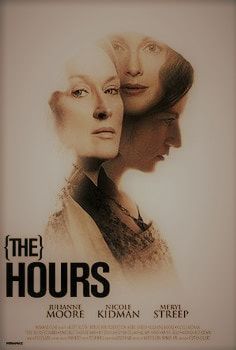
The Hours (2002)

12/7/2017

0 Comments


Michael Cunningham's The Hours and Postmodern Artistic Re-Presentation

by MARY JOE HUGHES
Picture
Now that Michael Cunningham's The Hours has been made into a film representing yet another echo of Woolf's Mrs. Dalloway it is worth investigating just how the later novel conceives its relation to its predecessor. Because The Hours directly lakes the role of literature as one of its subjects, it may provide a model for considering postmodern artistic representation more generally. 
Such re-telling or re-presentation of an earlier work of art is rife in postmodernity, and not just in fiction. Consider Stoppard's Rosenrcntz and Guildenstern are Dead. Smiley's A Thousand Acres. Hwang's M. Butterfly, Branagh's Love's Labour's Lost, John Madden's Shakespeare in Love, the rock opera Rome and Jewels, or the gospel version of Messiah. Too Hot to Handel as a random sampling from a long list. Although this kind of postmodern re-presentation has been condemned as pastiche or ironic parody.' the practice is nothing new. The notion that art must be brand-new, a kind of large-scale urban renewal project forever starting lrt)m scratch is mostly drawn from modernism. Many earlier art forms acknowledged their predecessors and borrowed liberally from both the structure and content of earlier models. One has only to consider the various versions of Faust or the models for Shakespeare's plays or Palladio's borrowing from classical forms or the later borrowing from Palladio or the habits of composers writing variations on earlier themes to acknowledge a venerable tradition of artistic repetition. In echoing this history, the arts of postmodernism suggest something more traditional than modernism, but they may be attempting something new as well, a departure as well as a return. But the "something new" is not easy to characterize. It eludes our grasp. 
​Much has been written about giving voice to the silences within the tradition, about opening it up to alternative perspectives, and certainly this is one of the effects of several of the postmodern works cited above, and of many more besides. The attempt to highlight the perspective of the "other" underscores the postmodern preoccupation with difference. But these gestures toward pluralism, however desirable and effective, reduce the postmodern aesthetic to a largely political or ethical purpose. It is worth considering what else is going on besides this opening to new voices. For example, what can we discover about the postmodern idea of art in works that echo and transform their predecessors? Cunningham's novel is a rich source for investigating this question because of its explicit focus on the role of literature and by extension the role of art or creativity more generally.
I am not concerned here with the many ways in which The Hours both echoes and extends the narrative of Woolf's Mrs. Dalloway. Let it suffice that the characters of the later novel recall those of the former: A woman named Clarissa plunges into the city to buy flowers for her party; a crazed poet who plunges to his death disturbs her party. Figures from the characters" pasts resurface in recollection and again in person on the day of the party, thereby breaking open the novel's temporal structure of a single day with myriad journeys into the past. In both works there is a luncheon party to which Clarissa is not invited, and in both works Clarissa worries about the questionable influence of a strident ideologue over her daughter. Although The Hours contains a similar cast of characters to those of Mrs. Dalloway and repeats the themes of love and death and time, Michael Cunningham does not simply ape the structure of Mrs. Dalloway and transpose it to New York in the late twentieth century. He takes an important but nonetheless minor theme in Mrs. Dalloway, Clarissa's intense youthful passion for Sally Seton, and considerably expands it in the later novel. Clarissa and Sally are lovers and many of the main characters are gay. Here we find the recycled fragments of the postmodern novel and the opening to new voices.
Those two elements are not my focus. Instead I am limiting our subject to the central image of the plunge in Mrs. Dalloway that is echoed in the later novel. In Woolf's novel this image paradoxically identifies Clarissa's plunge into life in preparation for her party (3) with the plunge of Septimus, the mad poet, toward death (184). The Hours repeats the same identification of the plunge into life (9) and the plunge toward death (199-203), continuing the watery imagery of the earlier novel, with its ripples widening in circles. These elements allow Cunningham to expand on the permeable boundaries between life and death that Woolf explores and on the widening circles that connect one person or event to another, moving toward the uncharted horizon. The plunge and its associated meanings are ultimately linked to the role of literature, especially in The Hours and, more generally in both novels, to the act of creation. 
​The Hours repeats from Mrs Dalloway a second image that is related to the idea of the plunge, the concept of moments when time "bursts open", as if defying the ​relentless procession of hour after hour by which chronological time unfolds. In Mrs. Dalloway. one such moment, experienced by Septimus, is explicitly related to both poetic inspiration and death:
The word "time" split its husk; poured its riches over him; and from his lips fell like shells, like shavings from a plane, without his making ihem, hard, white, imperishable words, and flew lo attach themselves to their places in an ode lo Time; an immortal ode to Time. He sang. Evans answered from behind the tree. The dead were in Thessaly, Evans sang. among the orchids. There they waited till the War was over, and now the dead, now Evans himself--(69-70)
read more
0 Comments


Leave a Reply.

    "A Love of UIQ": Félix Gutattari's Unfilmed Script
    Alejandro Jodorowsky - Dune 'The Movie You Will Never See'
    Barrage (2017)
    Before the Rain (1994)
    Blade Runner - A Camera on Violence: Reality and Fiction
    BLADE RUNNER 2049 AND ARRIVAL: a pedagogical cinema
    Brakes (2017) - Talks with Mercedes Gower
    COLUMBUS’ REVIEW: THE BEAUTY OF THIS MOTION PICTURE IS THE PICTUREn Text
    Darren Aronofsky - Mother! (2017)
    David Lynch - Night Town (Part 1)
    David Lynch - Night Town (Part 2)
    David Lynch - NIGHT TOWN (Part 3)
    David Lynch- NIGHT TOWN (Part 4)
    David Lynch -Head Like A House On Fire (Part 1)
    David Lynch - Head Like A House On Fire ( Part 2)
    David Lynch - Head Like a House on Fire (Part 3)
    David Lynch - Our SchoolGirl Of The Sorrows (Part 1)
    David Lynch - Our Schoolgirl Of The sorrows (Part 2)
    David Lynch - OUR SCHOOLGIRL OF THE SORROWS (Part 3)
    David Lynch - OUR SCHOOLGIRL OF THE SORROWS (Part 4)
    Dziga Vertov - The Man with the Movie Camera (1929)
    'Dune' (1984)
    Gabriel Range - Death of a President
    Germaine Dulac & Antonin Artaud - The Seashell and the Clergyman
    Inland Empire (2006)
    Ingmar Bergman - Hour of the Wolf/Vargtimmen (1968)
    Jean-Luc Godard - Alphaville (1965) (full movie)
    Jean Luc - Godard - Weekend
    Jean - Luc Godard - My Life to Live
    Jean-Luc Godard - Numero Deux ( Part 2)
    Jean -Luc - Godard - Numero Deux (Part 1)
    Jean-Luc Godard - Numero deux (Part 3)
    Jean-Luc Godard - Numero Deux (Part 4)
    Jean-Luc Godard - Breathless
    Mark Fisher - Existenzialism and Inhumanism
    Mark Fisher - eXistenZ and noncognitive labour
    McKenzie Wark - Edge of Tomorrow: Cinema of the Anthropocene
    MOTHERS (2010) by Milcho Manchevski
    DOMINICK SUZANNE-MAYER - No Country for Old Men and the Unavoidable Cycle of Greed and Violence
    No Country For Old Man - Cinephilosophy dialogue with Gabriele Guerra
    On the Milky Road (2016)
    PI (1998)
    Pier Paolo Pasolini - Salò (120 Days of Sodom)
    REWEIRDING ARCADIA
    Saltwater(2014)
    Silence (2016)
    Song To Song (2017)
    TERENCE BLAKE - ANAMNESIS AND ESTRANGEMENT (2): Jodorowsky’s DUNE
    The Death of a President interview with Gabriel Range
    The Dead Man 2 : Return Of The Dead Man (1994)
    The Dinner (2017)
    The Hours (2002)
    THE SPACE IN BETWEEN(2016)
    T2 Trainspotting (2017)
    The Daughter (2015)
    The Handmaiden ( Ah-Ga-SSI), (2016)
    The Other Side of Hope (2017)
    The Salesman (2016)
    The Young Karl Marx (2017)

    Archives

    December 2018
    January 2018
    December 2017
    November 2017
    October 2017
    July 2017
    June 2017
    May 2017
    April 2017
    March 2017
    February 2017

    RSS Feed

Powered by Create your own unique website with customizable templates.
  • OnScenes
  • News
  • Art
    • Music >
      • Album Review
    • Poetry
    • Film >
      • Filmmakers >
        • Movies
    • Theater >
      • TheaterMakers
  • Philosophy
  • PhiloFiction
  • Science&Technology
  • Economy
  • Media
    • Video
    • Audio
  • About
  • Contact
    • Location